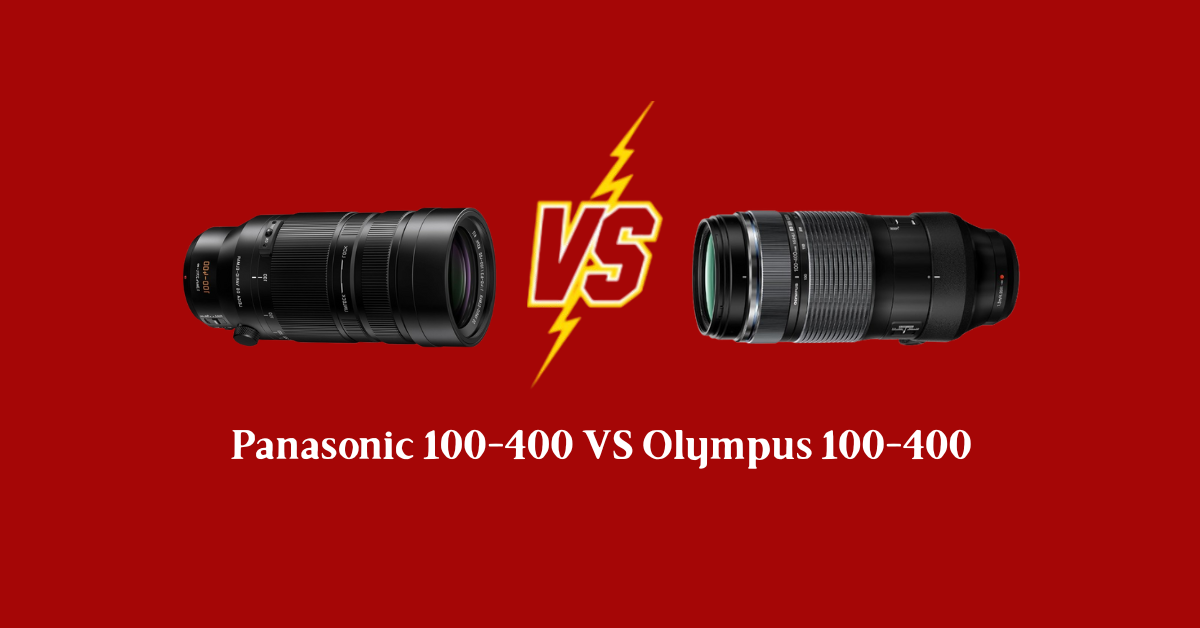
Panasonic 100-400 vs Olympus 100-400: Which Super Telephoto Lens Wins?
Super telephoto zoom lenses open a new world for wildlife and sports photographers who need extreme reach without carrying massive gear. The Panasonic Leica 100-400mm and the Olympus M.Zuiko 100-400mm compete directly in the Micro Four Thirds space, offering impressive zoom ranges and sharp image quality in compact designs.
The Panasonic lens delivers a premium Leica touch with strong optical performance and smooth operation, while the Olympus version focuses on versatility and weather-resistant durability.
Both lenses promise fast autofocus, excellent stabilization support, and beautiful background separation for distant subjects. Differences in handling, build quality, and price can sway photographers depending on shooting style and brand preference.
The Panasonic 100-400mm suits users seeking refined control and contrast, while the Olympus 100-400mm appeals to those who value rugged reliability. Understanding their strengths helps identify which lens delivers the best balance of performance and portability for real-world photography.
Panasonic 100-400 vs Olympus 100-400: Which Super Telephoto Lens Wins?
Photographers who shoot wildlife, sports, or outdoor scenes know how important a reliable telephoto lens is. For Micro Four Thirds users, two options often stand out — the Panasonic Leica DG Vario-Elmar 100–400mm F4.0–6.3 II ASPH. Power O.I.S. and the OM System M.Zuiko Digital ED 100–400mm F5.0–6.3 IS. Both offer impressive reach, solid stabilization, and durable construction designed for fieldwork.
At first glance, they seem similar. Each lens gives a 35mm equivalent of 200–800mm, has weather sealing, and promises sharp images across the zoom range. Yet, they differ in design philosophy, handling, and optical performance.
Let’s explore how they compare in depth — from features and usability to image quality and real-world performance.
Panasonic Leica DG Vario-Elmar 100–400mm F4.0–6.3 II ASPH
About This Tool
The Panasonic 100–400mm is a premium telephoto zoom built in partnership with Leica, designed for Micro Four Thirds cameras. It offers professional-grade performance in a surprisingly compact form. The lens provides a 35mm equivalent focal length of 200–800mm, giving photographers incredible reach for distant subjects.
Engineered with Leica-certified optics, it’s known for clarity, contrast, and edge-to-edge sharpness. Panasonic also focused on making this lens suitable for both stills and video, ensuring smooth aperture transitions and quiet autofocus.
This second-generation version improves weather sealing and operational smoothness. It’s built for professionals who shoot in tough conditions — from wildlife photography in rainforests to outdoor sports in winter environments.
Features
-
Focal Length Range: 100–400mm (200–800mm equivalent)
-
Aperture Range: f/4.0–6.3
-
Optical Construction: High-quality Leica DG glass with aspherical and ED elements for reduced distortion and chromatic aberration
-
Optical Image Stabilization (Power O.I.S.): Works seamlessly with Panasonic’s Dual I.S. system for steady shots
-
Closest Focusing Distance: 1.3 meters
-
Maximum Magnification: 0.5x (1:1 equivalent in full-frame terms)
-
Autofocus System: Fast and silent, optimized for both photos and 4K video
-
Weather Resistance: Dustproof, splashproof, and freezeproof (down to -10°C)
-
Build: Durable magnesium alloy body with smooth zoom and focus rings
-
Compatibility: Works with Panasonic’s teleconverters for extended reach
The Power O.I.S. stabilization works efficiently with compatible Panasonic camera bodies, giving smoother results for handheld shooting, especially at the long end of the zoom range.
What We Like
-
Excellent sharpness across the zoom range, even at 400mm
-
Leica-certified optics ensure professional color accuracy and contrast
-
Dual I.S. compatibility provides stable handheld performance
-
Strong build quality with full weather sealing
-
Compact and lightweight for such an extended focal length
-
Effective autofocus performance with minimal noise for video use
-
Impressive 0.5x magnification for close-up wildlife or macro-style shots
What We Didn’t Like
-
Zoom ring can feel a bit stiff at times
-
Slight vignetting at the wide end when shooting wide open
-
Aperture drops quickly as you zoom in, limiting low-light flexibility
-
Focus limiter switch would have been useful for faster subject tracking
My Opinion
The Panasonic Leica DG 100–400mm II feels like a refined professional lens built with precision. It delivers excellent image quality and color consistency that reflects its Leica collaboration. The lens performs beautifully for bird, wildlife, and sports photographers, offering a strong balance between optical power and portability.
Its image stabilization is excellent, especially when paired with Panasonic cameras supporting Dual I.S. The autofocus is responsive and quiet, suitable for hybrid shooters who do both photos and videos.
For anyone deeply invested in the Panasonic ecosystem, this lens is a standout option. It’s rugged, sharp, and highly versatile — ideal for those who spend long hours shooting outdoors.
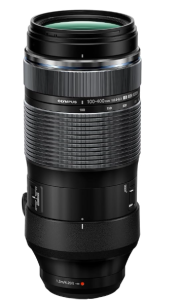
OM System M.Zuiko Digital ED 100–400mm F5.0–6.3 IS
About This Tool
The Olympus 100–400mm F5.0–6.3 IS lens, now branded under OM System, brings a slightly different approach. It focuses on value, compactness, and versatility, while maintaining solid telephoto performance.
This lens offers the same 200–800mm equivalent focal range but with a narrower aperture. It’s lighter and a bit more compact than its Panasonic counterpart, making it easier to carry during long wildlife or travel sessions.
Olympus designed it to complement their in-body stabilization system, so even though the aperture is smaller, the combination of in-lens and in-body stabilization makes handheld shooting reliable, even at maximum zoom.
Features
-
Focal Length Range: 100–400mm (200–800mm equivalent)
-
Aperture Range: f/5.0–6.3
-
Optical Construction: 21 elements in 15 groups, including Super ED and HR glass for minimizing color fringing
-
Image Stabilization: Optical, providing up to 3 EV steps of correction
-
Minimum Focusing Distance: 1.3 meters
-
Maximum Magnification: 0.29x (0.57x full-frame equivalent)
-
Autofocus System: High-speed and silent focusing, ideal for fast-moving subjects
-
Weather Resistance: Fully dustproof and splashproof construction
-
Build: Lightweight composite body with metal mount
-
Teleconverter Compatibility: Works with MC-14 (1.4x) and MC-20 (2.0x) teleconverters
The combination of optical stabilization and Olympus’ powerful in-body image stabilization produces crisp results even when shooting handheld at 800mm equivalent focal length.
What We Like
-
Sharp and detailed results throughout the zoom range
-
Lightweight design makes it comfortable for travel and handheld use
-
Weather-sealed for field shooting in all conditions
-
Compatible with Olympus teleconverters for extended range
-
Fast and quiet autofocus, suitable for wildlife and sports photography
-
Excellent image stabilization performance
What We Didn’t Like
-
Aperture range of f/5.0–6.3 limits depth-of-field control
-
No tripod collar included by default
-
Autofocus slightly slower in low light compared to Panasonic’s lens
-
Some chromatic aberration at full zoom under harsh lighting
My Opinion
The OM System 100–400mm is a solid performer for photographers who want reach without heavy weight or cost. It pairs perfectly with Olympus camera bodies, taking full advantage of the in-body stabilization system.
The optical performance is strong, producing sharp images across most of the zoom range. Autofocus is quick enough for wildlife and sports, and the weather-sealed build ensures reliability outdoors.
While the aperture is slightly slower than the Panasonic lens, the stabilization and teleconverter compatibility make it an excellent choice for handheld photography in diverse conditions. It’s a practical, high-value lens for Micro Four Thirds users who prioritize portability and long reach.
Detailed Comparison Of Panasonic 100–400mm VS Olympus 100–400mm
Both lenses share many traits — a 100–400mm zoom range, weather sealing, and image stabilization — but the Panasonic Leica DG 100–400mm II leans more toward professional refinement, while the Olympus 100–400mm focuses on accessibility and portability.
The Panasonic lens benefits from Leica optics, offering slightly better micro-contrast and color rendering. It also provides a faster aperture at the wide end (f/4.0 vs f/5.0), giving it a small edge in low-light shooting. Its Power O.I.S. system works especially well with Panasonic’s Dual I.S. cameras, offering superior stability during handheld telephoto shots.
The Olympus lens, on the other hand, shines in its compact design and lighter weight. It integrates seamlessly with Olympus bodies, producing excellent handheld results even at long focal lengths. While its aperture range is narrower, Olympus’ superior in-body stabilization compensates effectively.
Autofocus speed is comparable between both, though the Panasonic lens feels slightly quicker when paired with a Panasonic camera. In image sharpness, the two are close, but the Panasonic shows slightly better clarity at the edges, especially wide open.
The Olympus 100–400mm wins in portability and value, while the Panasonic 100–400mm excels in optical refinement and pro-level handling.
If your workflow involves video or hybrid shooting, Panasonic’s smoother aperture control and quieter focus motor offer a real advantage. For still photographers, particularly wildlife and bird shooters, both lenses deliver strong results — your choice largely depends on which camera system you use.
FAQs
1. Are both lenses compatible with any Micro Four Thirds camera?
Yes. Both the Panasonic 100–400mm and Olympus 100–400mm lenses work on all Micro Four Thirds mount cameras, including Panasonic and OM System bodies.
2. Which lens has better stabilization?
The Panasonic’s Power O.I.S. performs best with Panasonic Dual I.S. bodies, offering superb handheld stability. Olympus’s in-lens stabilization works well too, especially when paired with their advanced in-body stabilization system.
3. Which one is sharper at 400mm?
The Panasonic Leica DG 100–400mm II has a slight advantage in corner sharpness and contrast at full zoom. That said, the Olympus 100–400mm remains very sharp in the center and performs consistently across most of the frame.
4. Can these lenses handle low-light conditions?
Both lenses perform best in daylight. The Panasonic’s slightly faster aperture at f/4.0 gives it an edge in lower light, but neither is ideal for dark environments without support from higher ISO or a tripod.
5. Do they support teleconverters?
Yes. Both support teleconverters, though compatibility works best within their brand systems — Panasonic’s lens works with Panasonic teleconverters, and Olympus’ lens pairs with MC-14 and MC-20.
6. Which lens is better for travel photography?
The Olympus 100–400mm is lighter and more compact, making it the better choice for travel. The Panasonic 100–400mm, though slightly heavier, provides better image quality for professional use.
7. Are both lenses weather-sealed?
Yes. Both lenses offer dustproof and splashproof designs, and the Panasonic adds freeze resistance down to -10°C, making it more robust for cold-weather shooting.
Conclusion
The Panasonic 100–400mm and Olympus 100–400mm are two exceptional telephoto lenses designed for Micro Four Thirds users who need power, reach, and flexibility.
The Panasonic Leica DG 100–400mm II stands out for its Leica-quality optics, slightly faster aperture, and superb stabilization integration. It’s built for photographers who demand the highest image quality and durability in professional conditions.
The Olympus M.Zuiko 100–400mm, in contrast, focuses on value, portability, and versatility. It’s an ideal option for outdoor enthusiasts and wildlife photographers who want strong performance without heavy gear.
In the end, your decision depends on your shooting style and camera system.
-
Panasonic users will benefit more from the Leica DG 100–400mm’s Dual I.S. support and image precision.
-
Olympus users will love the M.Zuiko 100–400mm’s compact design and superb compatibility with in-body stabilization.
Both lenses prove how powerful the Micro Four Thirds system can be — delivering professional telephoto performance in a compact form.