Canon M50 vs Panasonic G7: Two Budget Mirrorless Cameras Face Off
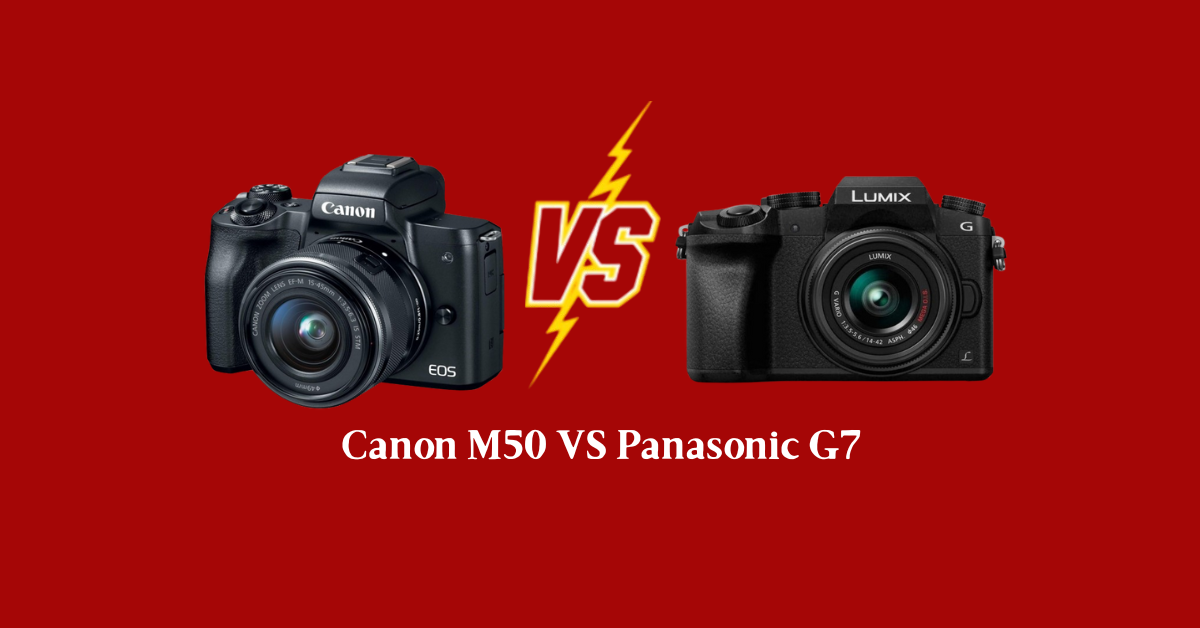
The Canon M50 and The Panasonic G7 sit at the heart of the budget mirrorless camera market, attracting creators who want great quality without overspending. Each model offers a strong blend of performance, portability, and features that appeal to both beginners and enthusiasts.
The Canon M50 delivers excellent color science, solid autofocus, and easy handling, making it a favorite for vloggers and travel shooters. The Panasonic G7 focuses on flexibility, offering impressive 4K video tools and customizable controls that support more advanced shooting setups.
Both cameras share compact bodies, interchangeable lenses, and sharp image output, yet they differ in design philosophy and shooting experience. The M50 leans toward simplicity and user-friendliness, while the G7 gives more control for those who like fine-tuning settings. Exploring these differences helps determine which camera matches your creative approach and delivers the best value for your photography or video projects.
Canon M50 vs Panasonic G7: Which Mirrorless Camera Fits You Better?
Both the Canon EOS M50 and the Panasonic Lumix G7 are popular mirrorless cameras known for compact size, strong video features, and beginner-friendly handling. They attract vloggers, travelers, and photography enthusiasts who want DSLR-like quality without the bulk.
At first glance, they seem very similar. Both capture 4K video, have electronic viewfinders, and feature tilting touchscreens. But under the surface, their designs reflect two different philosophies. The Canon M50 leans toward simplicity and color-rich images, while the Panasonic G7 aims for flexible control and advanced video tools.
Let’s explore both cameras in detail — their design, performance, strengths, and weaknesses — and see which one suits your needs best.
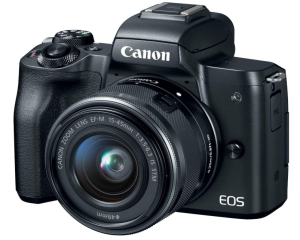
Canon EOS M50 Mirrorless Camera
About This Tool
The Canon M50 is a compact mirrorless camera built for creators who want great image quality with easy usability. It uses a 24.1MP APS-C CMOS sensor paired with the DIGIC 8 image processor, producing vibrant colors and clear details.
It’s part of Canon’s EF-M mount system, designed for lightweight lenses and portability. The M50 also includes Canon’s famous Dual Pixel CMOS AF, known for fast and accurate autofocus during both stills and video. Its fully articulated touchscreen and high-resolution electronic viewfinder make it versatile for vlogging, selfies, and creative shooting angles.
Features
-
Sensor: 24.1MP APS-C CMOS
-
Processor: DIGIC 8
-
Lens Mount: Canon EF-M
-
Image Stabilization: Digital (in video mode)
-
Autofocus System: Dual Pixel CMOS AF
-
ISO Range: 100–51,200 (expanded)
-
Video Resolution: 4K UHD (2160p)
-
Viewfinder: 2.36M-dot electronic viewfinder
-
Screen: 3-inch vari-angle touchscreen (1.04M dots)
-
Burst Shooting: 7.4 fps continuous shooting
-
Connectivity: Built-in Wi-Fi and Bluetooth
-
Weight: 0.86 lbs (390g)
The M50 also supports the EOS Webcam Utility, which lets you turn it into a high-quality webcam — ideal for streaming and online meetings.
What We Like
-
Excellent color science and skin tones
-
Reliable Dual Pixel autofocus in photo mode
-
Fully articulating touchscreen for flexible angles
-
Compact and lightweight design
-
Easy-to-use interface with logical menu layout
-
Good dynamic range for an entry-level camera
-
Built-in Wi-Fi and Bluetooth for quick sharing
What We Didn’t Like
-
4K video mode uses a heavy crop and loses Dual Pixel AF
-
Short battery life compared to larger models
-
Limited EF-M lens selection
-
Plastic body feels less durable than higher-end cameras
My Opinion
The Canon M50 delivers high-quality images with pleasing color straight out of the camera. It’s ideal for beginners, vloggers, or content creators who want a camera that “just works.”
The Dual Pixel AF system shines for stills and Full HD video, while the rotating touchscreen makes it easy to frame yourself for YouTube or travel vlogs. Though its cropped 4K recording is a limitation, most users find its 1080p performance excellent.
This camera fits those who want Canon’s classic color output and an intuitive shooting experience in a portable form.
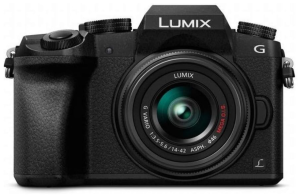
Panasonic Lumix G7 Mirrorless Camera
About This Tool
The Panasonic Lumix G7 is a feature-rich mirrorless camera designed for creative shooters who enjoy manual control and video flexibility. It features a 16MP Micro Four Thirds sensor with no low-pass filter, which helps capture fine detail. It’s part of the Micro Four Thirds system, meaning it’s compatible with a wide range of lenses from Panasonic and Olympus.
The G7 supports 4K video recording at 30fps and includes 4K Photo Mode, allowing you to grab high-quality stills from video clips. Its dual control dials and customizable buttons make it feel more like a professional tool than an entry-level camera.
Features
-
Sensor: 16MP Micro Four Thirds CMOS
-
Processor: Venus Engine
-
Lens Mount: Micro Four Thirds
-
Image Stabilization: None (lens-based only)
-
Autofocus System: Contrast Detection with 49 points
-
ISO Range: 100–25,600
-
Video Resolution: 4K UHD (3840×2160) at 30fps
-
Viewfinder: 2.36M-dot OLED electronic viewfinder
-
Screen: 3-inch tilt/swivel touchscreen (1.04M dots)
-
Burst Shooting: 8 fps
-
Connectivity: Wi-Fi, micro-HDMI, mic input, USB
-
Weight: 0.9 lbs (410g)
The G7 also includes external mic support, which gives vloggers and filmmakers better audio control during recording.
What We Like
-
Sharp and detailed 4K video with no heavy crop
-
Dual dials and customizable buttons for quick settings
-
High-quality OLED viewfinder and clear LCD screen
-
Lightweight but solid build
-
Wide lens compatibility with the Micro Four Thirds system
-
Excellent value for hybrid shooters (photo + video)
-
External microphone input for better sound recording
What We Didn’t Like
-
No in-body image stabilization
-
Low-light performance not as strong as APS-C sensors
-
Autofocus can hunt during video recording
-
Plastic build feels less premium
-
Menus may seem complex to beginners
My Opinion
The Panasonic G7 is a strong camera for photographers who want manual control and better 4K video flexibility. The image quality is sharp, and the 4K Photo feature helps capture quick motion moments. Its controls feel intuitive for experienced users, offering professional-style dials and function buttons.
The lack of in-body stabilization and lower light sensitivity are its main weaknesses, but its versatility and video tools make it a favorite for budget filmmakers and content creators. This camera suits those who value customization, lens variety, and clean 4K video performance.
Detailed Comparison Of Canon M50 vs Panasonic G7
The Canon M50 and Panasonic G7 cater to different types of creators. In image quality, the Canon M50’s 24.1MP APS-C sensor delivers slightly cleaner results with better low-light performance and smoother color transitions. Panasonic’s 16MP Micro Four Thirds sensor still produces detailed shots but with a bit more noise in darker settings.
For autofocus, Canon’s Dual Pixel CMOS AF is faster and more accurate, especially for still photography. Panasonic relies on contrast detection, which works well but can hesitate during video recording.
In video performance, Panasonic takes the lead. The G7 records 4K without crop, while Canon’s 4K mode is cropped and lacks Dual Pixel AF. The G7 also supports an external microphone and full manual control, making it better for serious video work.
The M50’s vari-angle touchscreen is more beginner-friendly, while the G7’s dual dials give advanced users more control. Both have electronic viewfinders with similar resolution, offering clear framing even in bright sunlight.
Canon’s color output is warmer and more natural, great for portraits and vlogs. Panasonic’s colors are neutral, better for post-production grading. In portability, both cameras are light, but Canon’s smaller lenses make the setup more compact. For lens variety, the Micro Four Thirds system offers far more options than Canon’s EF-M mount.
In short:
-
Canon M50 = Best for beginners, vloggers, and casual shooters who love Canon color and easy usability.
-
Panasonic G7 = Best for video creators, advanced users, and those who want manual control and more lens choices.
FAQs
1. Which camera has better video quality?
The Panasonic G7 delivers cleaner 4K video with no crop and better manual control. The Canon M50’s 4K mode crops heavily and loses Dual Pixel AF.
2. Which one performs better in low light?
The Canon M50’s larger APS-C sensor performs better in low light and offers less noise at higher ISO settings.
3. Are both cameras good for beginners?
Yes. The Canon M50 is easier for complete beginners, while the Panasonic G7 suits users who like adjusting settings manually.
4. Can I use these cameras for vlogging?
Both are good for vlogging. The M50’s color science and flip screen are excellent for talking to the camera, while the G7 provides better audio and 4K video flexibility.
5. Do they have image stabilization?
The Canon M50 has digital stabilization in video mode, while the Panasonic G7 relies on lens-based stabilization. Neither has built-in sensor stabilization.
6. Which has a better autofocus system?
The Canon M50’s Dual Pixel AF is more reliable, especially for tracking subjects. The G7’s contrast AF is accurate but slower in some lighting.
7. Which one offers more lens options?
The Panasonic G7, with its Micro Four Thirds mount, has a wider range of compatible lenses from Panasonic, Olympus, and third-party brands.
Conclusion
Both cameras deliver great performance for their price and category, but they serve different user types. The Canon EOS M50 stands out for ease of use, strong autofocus, and beautiful color output.
It’s the better choice for beginners, vloggers, and photographers who want quality results without digging into complex settings. The Panasonic Lumix G7 shines in video capabilities and manual control. It’s perfect for creators who need 4K flexibility, external mic input, and deeper customization.
If you prioritize photo quality and simplicity, go with the Canon M50. If you prefer video control and versatility, choose the Panasonic G7. Both cameras prove that compact mirrorless systems can deliver professional-looking results without the bulk or cost of a DSLR.