
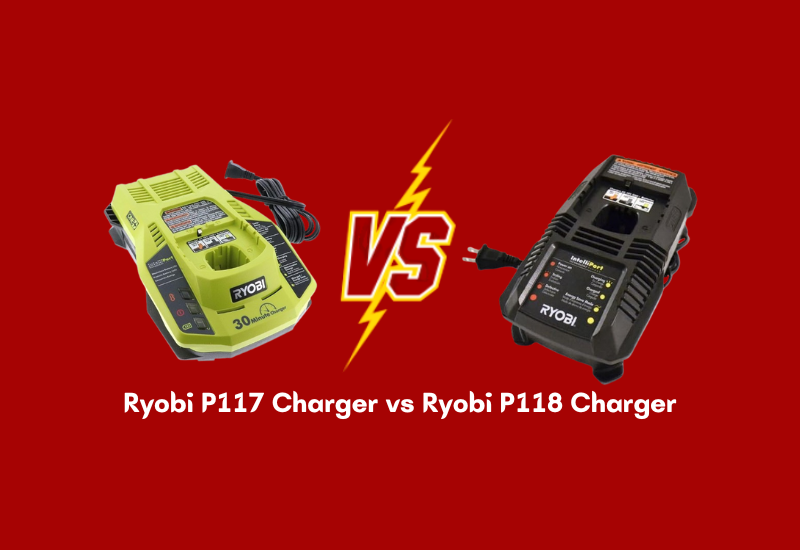
Ryobi P117 vs P118: Which Charger Powers Your Tools Better?
Power tool performance relies heavily on the right charger, and Ryobi offers a wide range to suit different needs. Among the most talked-about options are the Ryobi P117 and P118, two compact chargers designed for the brand’s popular 18V ONE+ battery system.
Both models deliver reliable charging, but each carries unique features that set it apart. The P117 is known for its smart charging technology that extends battery life by monitoring temperature and charge cycles.
The P118, on the other hand, offers straightforward usability with a simple design that gets the job done without extra frills. DIY enthusiasts and professionals often debate which one provides better value, speed, and convenience.
Choosing between these two depends on whether advanced features or simplicity matter more in your daily workflow. A closer comparison of their design, charging efficiency, and user experience reveals which charger might be the smarter pick for your toolkit.
Ryobi P117 vs P118: Detailed Comparison
Chargers are just as important as batteries. Without the right charger, even the best tools cannot run. Ryobi offers two strong options in its 18V ONE+ lineup: the P117 and the P118. Both support dual chemistry, meaning they can charge lithium-ion and NiCad batteries. At first glance, they look similar, but key differences make each one better for different users. This guide will break them down in detail.
Ryobi P117 Charger
About This Tool
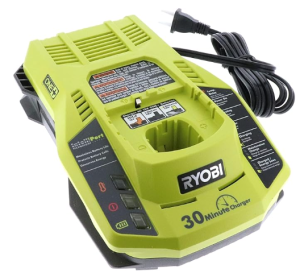
The Ryobi P117 is one of the most trusted chargers in the ONE+ system. It supports both lithium-ion and NiCad batteries. It is lightweight, wall-mountable, and smart enough to protect your batteries with IntelliPort technology. This keeps your batteries healthy and saves power.
Features
-
Dual chemistry charging for lithium-ion and NiCad
-
Compatible with P100, P101, P102, P103, P104, P105, P107, and P108 batteries
-
IntelliPort technology for battery protection and energy saving
-
Wall-mounting design with screw brackets
-
Temperature indicator for hot or cold battery conditions
-
Charging gauge shows charge progress
-
Charges some batteries in as little as 30 minutes
-
Compact size: 7.7″ x 5.3″ x 3.1″
-
Lightweight build at 1.2 pounds
What We Like
-
Works with both old NiCad and new lithium-ion batteries
-
Quick charge speed for less downtime
-
IntelliPort tech keeps batteries in top shape
-
Wall-mount option saves workspace
-
Temperature alerts prevent damage
-
Easy-to-read charge gauge
What We Didn’t Like
-
Bulk packaging in many cases, not retail box
-
Single charger only, no battery included
-
Slightly bigger footprint compared to compact chargers
My Opinion
The P117 feels like a reliable everyday charger. It delivers consistent performance and charges faster than many older Ryobi chargers. The IntelliPort feature is a big plus because it helps batteries last longer. I find it ideal for users with multiple battery types who want one charger that can handle them all.
Ryobi P118 Charger
Product Details
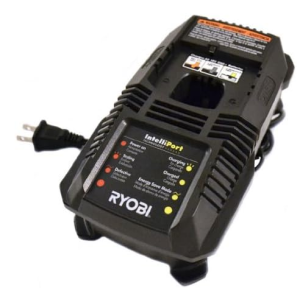
The Ryobi P118 is more than just a charger. It often comes bundled with two compact P102 lithium-ion batteries. It shares many features with the P117 but adds extra convenience for new users who need both a charger and starter batteries. Its compact design, fade-free battery power, and smart charging make it a practical choice.
Features
-
Dual chemistry charging for lithium-ion and NiCad
-
Includes 2 genuine Ryobi P102 lithium-ion batteries
-
Compact battery design for reduced weight and fatigue
-
Fade-free power ensures full strength until empty
-
Charger has IntelliPort maintenance mode
-
Status gauge shows charging progress
-
Wall-mountable with screw brackets
-
Compatible with most Ryobi 18V batteries including P100, P102, P103, P104, P105, P107, and P108
-
Compact size: 10″ x 12″ x 4″
-
Ultra-light weight charger at 0.01 pounds
What We Like
-
Bundle includes two extra batteries, saving money
-
Compact batteries are easier to use with smaller tools
-
Fade-free power keeps tools running at full strength
-
Dual chemistry support works with older NiCad batteries
-
Wall-mount option for flexible storage
-
Good choice for beginners building their Ryobi tool kit
What We Didn’t Like
-
Charges slightly slower than the P117
-
P102 batteries have less runtime compared to larger options
-
Bundle can cost more upfront than buying a charger alone
-
Charger feels less sturdy compared to the P117
My Opinion
The P118 bundle is best for someone starting with Ryobi tools. It gives both a charger and two working batteries right out of the box. While the charger itself is not as fast as the P117, the added value of included batteries makes it attractive. It feels like a starter pack more than a long-term heavy-duty solution.
Detailed Comparison: Ryobi P117 Charger vs P118 Charger
Both chargers support dual chemistry, wall mounting, and IntelliPort technology. The P117 focuses on speed and durability. It charges faster, has a strong build, and includes helpful features like a temperature indicator.
The P118, on the other hand, shines as a bundle deal. It includes two P102 batteries, which provide compact and fade-free power. The trade-off is slower charging speed and less battery runtime compared to higher-capacity packs.
If you already own several Ryobi batteries and just need a high-performing charger, the P117 makes more sense. If you are new to Ryobi tools or want backup batteries included, the P118 bundle is the better choice.
FAQs
Q1. Are the P117 and P118 chargers compatible with the same batteries?
Yes. Both support lithium-ion and NiCad batteries from the Ryobi 18V One+ system.
Q2. Which charger works faster?
The P117 usually charges faster, sometimes in as little as 30 minutes.
Q3. Does the P118 include batteries?
Yes. Most bundles come with two compact P102 lithium-ion batteries.
Q4. Are the P102 batteries in the P118 good for heavy-duty tools?
Not always. They are compact and better suited for drills, drivers, and light tools. For saws or blowers, larger batteries like the P108 may be better.
Q5. Can both chargers be mounted on the wall?
Yes. Both have screw brackets for wall mounting.
Conclusion
The Ryobi P117 and P118 both serve the same purpose but target different needs. The P117 stands out as a fast, reliable, and long-lasting charger for users who already own batteries. The P118 brings more value to new users by including two compact batteries, though it charges slower.
Both deliver smart charging with IntelliPort technology and work across the Ryobi One+ lineup. The right choice depends on your situation: speed and durability with the P117, or a ready-to-go starter bundle with the P118.


