
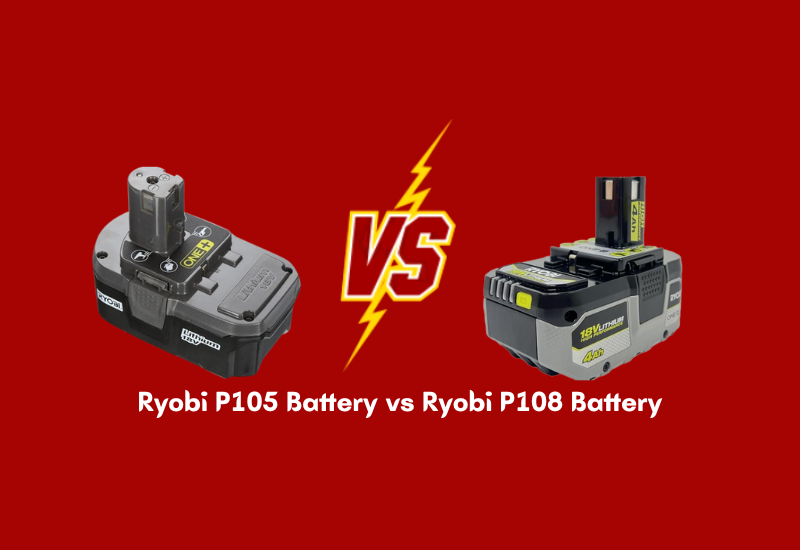
Ryobi P105 vs P108: Which Battery Packs the Best Performance?
DIY enthusiasts and professionals alike often search for the perfect balance of power, runtime, and value in their cordless tools. Ryobi has built a strong reputation with its 18V One+ battery line, and two models frequently spark debate: the P105 and the P108.
At first glance, both batteries look similar, but each offers distinct advantages that can significantly influence tool performance and user experience. The P105 delivers a compact, lightweight design suited for smaller projects or quick tasks around the home.
On the other hand, the P108 boasts higher capacity and extended runtime, making it a reliable partner for demanding jobs that drain power quickly. Deciding between them depends on your workload, budget, and expectations from a battery. Exploring their differences in size, output, longevity, and cost can help you select the option that best supports your tool collection and project goals.
Ryobi P105 vs P108: Which 18V Battery is Better for Your Tools?
Ryobi’s ONE+ system is one of the most popular cordless tool lines. The main reason is that one battery works with every tool in the series. Still, not all Ryobi batteries are the same.
Two common options are the Ryobi P105 and the Ryobi P108. Both are 18V lithium-ion batteries, but they come with different capacities, features, and price points. Here’s a full breakdown of each battery, followed by a direct comparison to help you choose the right one.
Ryobi P105 Battery
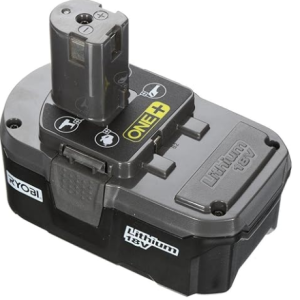
About This Tool
The Ryobi P105 is an older model in the 18V ONE+ system. It offers a good mix of runtime, weight, and performance for regular DIY projects. It works with all Ryobi 18V ONE+ tools and provides fade-free power, meaning it runs at full strength until the battery is empty.
Features
-
Voltage: 18V lithium-ion battery.
-
Compatible with all Ryobi ONE+ tools.
-
Works with ONE+ dual chemistry chargers.
-
Higher capacity than older Ni-Cd packs.
-
Fade-free power from start to finish.
-
Quick-snap design for easy installation and removal.
-
Weight: 1.79 pounds.
-
Size: 7.16 x 3.39 x 6.5 inches.
What We Like
-
Stronger and lighter than older Ni-Cd batteries.
-
Works with every Ryobi 18V tool.
-
Fade-free power gives consistent performance.
-
Easy to attach and remove with snap-on design.
What We Didn’t Like
-
Heavier than the newer P108.
-
No fuel gauge to check charge level.
-
Does not perform as well in cold weather.
-
Shorter runtime compared to newer lithium+ models.
My Opinion
The P105 is a reliable battery for light to medium projects. It gets the job done for most household tasks like drilling, cutting, or driving screws. It doesn’t have modern extras like a fuel gauge, but it is dependable and affordable if you already use Ryobi tools.
Ryobi P108 Battery
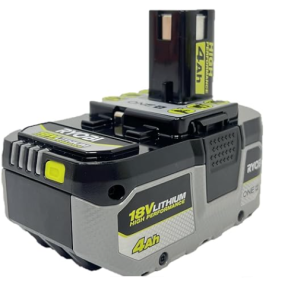
Product Details
The Ryobi P108 is a newer and more advanced battery in the 18V ONE+ family. It is designed to deliver longer runtime, better performance, and more convenience features than the P105. It also includes extreme weather performance, making it more versatile for outdoor projects.
Features
-
Voltage: 18V lithium-ion battery.
-
High capacity design for longer runtime.
-
Increases tool torque up to 35%.
-
Runs up to 4x longer than older Ni-Cd packs.
-
Fuel gauge to check charge level before use.
-
Works in extreme weather conditions.
-
Compatible with all Ryobi 18V tools.
-
Recharges in as little as 60 minutes.
-
Weight: 1.45 pounds.
-
Size: 7.17 x 6.26 x 3.19 inches.
What We Like
-
Lighter than the P105 despite higher capacity.
-
Longer runtime makes it better for big jobs.
-
Fuel gauge lets you check charge at any time.
-
Faster recharge compared to older packs.
-
Extreme weather performance adds reliability.
What We Didn’t Like
-
Usually more expensive than the P105.
-
Slightly larger in size, so less compact.
-
Runtime still depends on tool and job type.
My Opinion
The P108 is a clear upgrade over the P105. It is lighter, more powerful, and adds useful features like the fuel gauge. For long projects or heavy-duty tools like saws and grinders, it performs better. It costs more, but the value is worth it if you want efficiency and less downtime.
Detailed Comparison: Ryobi P105 vs P108
Both the Ryobi P105 and P108 belong to the 18V ONE+ battery family and work with every Ryobi 18V tool. Both use lithium-ion cells that give fade-free power and resist memory effects. The difference comes down to performance and convenience.
The P105 is heavier, has no fuel gauge, and offers shorter runtime. It is better suited for smaller projects and lighter use. The P108 is newer, lighter, and lasts longer on a single charge. It also recharges faster and works in cold or hot conditions where the P105 may slow down.
For homeowners who only do occasional drilling or cutting, the P105 still works fine. For anyone who spends more time on projects or uses high-demand tools, the P108 is the smarter choice.
FAQs
Q1. Do both P105 and P108 work with the same charger?
Yes, both work with Ryobi’s 18V ONE+ dual chemistry chargers.
Q2. How much longer does the P108 last compared to the P105?
The P108 can last almost twice as long, depending on the tool and task.
Q3. Can I use these batteries in older Ryobi tools?
Yes, both are backward compatible with all 18V ONE+ tools.
Q4. Is the P108 worth the higher price?
Yes, if you use tools often or work on bigger jobs. The longer runtime and lighter weight make it more efficient.
Q5. Which one is better for beginners?
The P105 is simple and works fine for small tasks, but beginners will still benefit from the P108 because of its extra runtime and fuel gauge.
Conclusion
The Ryobi P105 is a solid, budget-friendly battery for light use. It powers all Ryobi 18V tools and offers steady performance for small projects. The Ryobi P108, on the other hand, is lighter, stronger, and lasts longer. It also includes a fuel gauge and extreme weather performance, making it the better all-around option.
For small jobs and lower cost, go with the P105. For longer runtime, better features, and more power, the P108 is the smarter choice.


