Ryobi P340 vs P343: Which Multi-Tool Earns Its Spot in Your Toolbox?
DIY projects and professional repairs demand tools that balance versatility, durability, and ease of use. Ryobi’s multi-tools consistently stand out for their ability to handle sanding, cutting, grinding, and more, all in a single compact design.
Among the most discussed models are the Ryobi P340 and the Ryobi P343. Both belong to Ryobi’s ONE+ lineup, offering cordless freedom and compatibility with the brand’s 18V battery system.
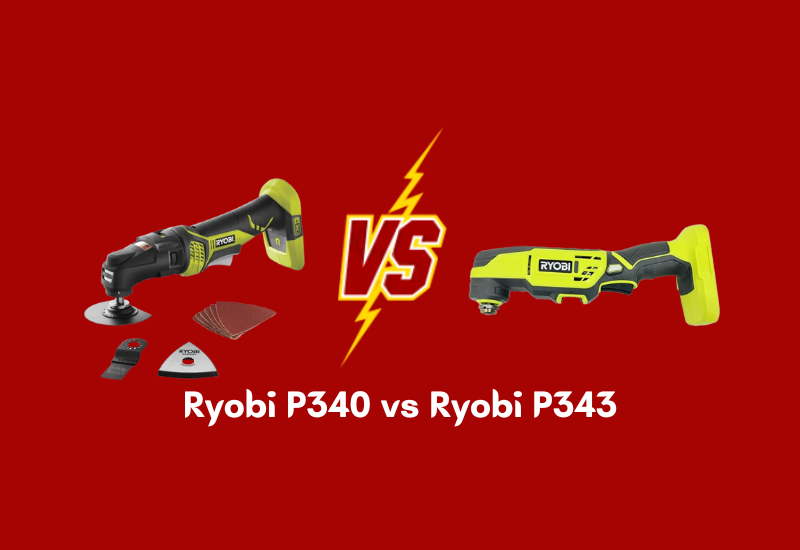
At first glance, they appear quite similar, but a closer look highlights key differences that impact performance and usability. The P340 delivers a combination tool design with a built-in multi-head adapter, while the P343 emphasizes streamlined performance with an improved oscillation angle.
Each tool offers unique strengths that suit different types of users, from casual DIYers to dedicated craftsmen. This comparison highlights their major features, pros, and drawbacks, helping you decide which model deserves a place in your workshop.
Ryobi P340 vs P343: Detailed Comparison
Multi-tools bring flexibility to any toolbox. They cut, sand, grind, and reach where other tools cannot. Ryobi has two strong options in its 18V ONE+ lineup: the P340 JobPlus and the P343 Oscillating Multi-Tool. Both run on the same battery platform but serve slightly different needs. The P340 focuses on attachments and compatibility, while the P343 focuses on speed control and simple design. Let’s explore them in detail.
Ryobi P340 One+ 18V JobPlus Multi Tool
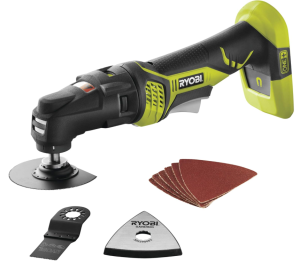
About This Tool
The Ryobi P340 is a versatile cordless multi-tool designed for cutting, sanding, and grouting. It includes three useful attachments, making it ready for many tasks right out of the box. The body features rubber molding for a steady grip, even in tough conditions. Another highlight is its compatibility with Ridgid JobMax attachments, giving users more flexibility.
Features
-
Runs on the 18V ONE+ battery system
-
Includes 3 attachments: sanding, crescent saw, and straight woodcutting saw
-
Cross-compatible with Ridgid JobMax attachments
-
Rubber hex overmold grip for better control
-
Power base model P246, attachment model P570
-
Works with Ryobi batteries: P100, P101, P102, P103, P104, P105, P107, P108
-
Cordless and lightweight at 2.42 pounds
-
Compact design for tight spaces
What We Like
-
Comes with three useful attachments
-
Compatible with attachments from other brands
-
Comfortable grip even in slippery conditions
-
Strong battery compatibility across the Ryobi line
-
Works well for cutting, sanding, and grout removal
-
Good option for DIY and light professional use
What We Didn’t Like
-
Batteries and charger sold separately
-
Bulkier compared to the P343
-
Attachments may need frequent switching for different tasks
-
Not the fastest oscillating speed compared to newer models
My Opinion
The P340 feels like a complete starter tool. With three attachments included, it is practical for a wide range of jobs. Its cross-brand compatibility adds value, especially for users with Ridgid tools. The grip design is another plus. On the downside, it feels heavier than the P343 and does not offer variable speed control. Still, it’s a solid choice for versatility.
Ryobi P343 18V Oscillating Multi Tool
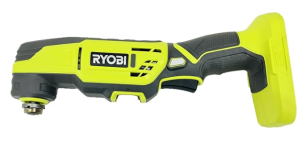
Product Details
The Ryobi P343 is a newer model that focuses on control and ease of use. It features a variable speed dial, letting users adjust oscillations between 10,000 and 20,000 OPM. This makes it more precise for cutting, sanding, or scraping. It is lighter and more compact than the P340, making it easier to handle in smaller spaces.
Features
-
18V cordless multi-tool
-
Variable speed dial: 10,000 to 20,000 OPM
-
3 degrees of oscillation
-
Compact and lightweight design at 2.18 pounds
-
Bare tool only (batteries and charger sold separately)
-
Bulk packaged for shipping, no retail box
-
Works with all Ryobi ONE+ 18V batteries
-
Simple and easy-to-handle size
What We Like
-
Variable speed gives more control over different tasks
-
Lightweight and compact for easy handling
-
Smooth oscillation with 3-degree movement
-
Compatible with all Ryobi 18V ONE+ batteries
-
Great for cutting, sanding, and scraping in tight spaces
What We Didn’t Like
-
No attachments included in most packages
-
Bulk packaging may not appeal to all buyers
-
Requires separate purchase of batteries and charger
-
Fewer compatibility options compared to the P340
My Opinion
The P343 feels modern and efficient. Its variable speed feature gives better precision than the P340. It is light in the hand, making it easier for long jobs or overhead use. On the downside, it does not come with extra attachments, and buyers may need to purchase accessories separately. For users who value control and compact design, the P343 stands out.
Detailed Comparison: Ryobi P340 vs P343
The Ryobi P340 is about versatility. It comes with attachments and works with Ridgid JobMax accessories, which adds flexibility. The grip design is comfortable, and it feels like a complete starter set. The Ryobi P343, in contrast, is about control and simplicity. Its variable speed dial allows smoother performance, and its compact size makes it easier to handle in tight areas.
Both tools run on the same 18V ONE+ battery system. The P340 is heavier but includes attachments, while the P343 is lighter and better for precision. The choice depends on what matters more: versatility with attachments (P340) or speed control and compact handling (P343).
FAQs
Q1. Do the P340 and P343 use the same Ryobi batteries?
Yes. Both work with all Ryobi ONE+ 18V batteries.
Q2. Which one is better for tight spaces?
The P343 is smaller and lighter, making it easier for small or overhead jobs.
Q3. Does the P340 come with batteries?
No. It includes three attachments but no batteries or charger.
Q4. Does the P343 have attachments in the box?
No. It is often sold as a bare tool, so attachments must be bought separately.
Q5. Which one has better speed control?
The P343 has a variable speed dial, while the P340 does not.
Conclusion
The Ryobi P340 and P343 are both useful multi-tools in the 18V ONE+ system. The P340 is better for users who want attachments included and compatibility with other brands. The P343 is lighter, easier to handle, and has variable speed for more precise work. Both do the job, but the right choice depends on your needs. For attachments and flexibility, go with the P340. For control and compact design, go with the P343.