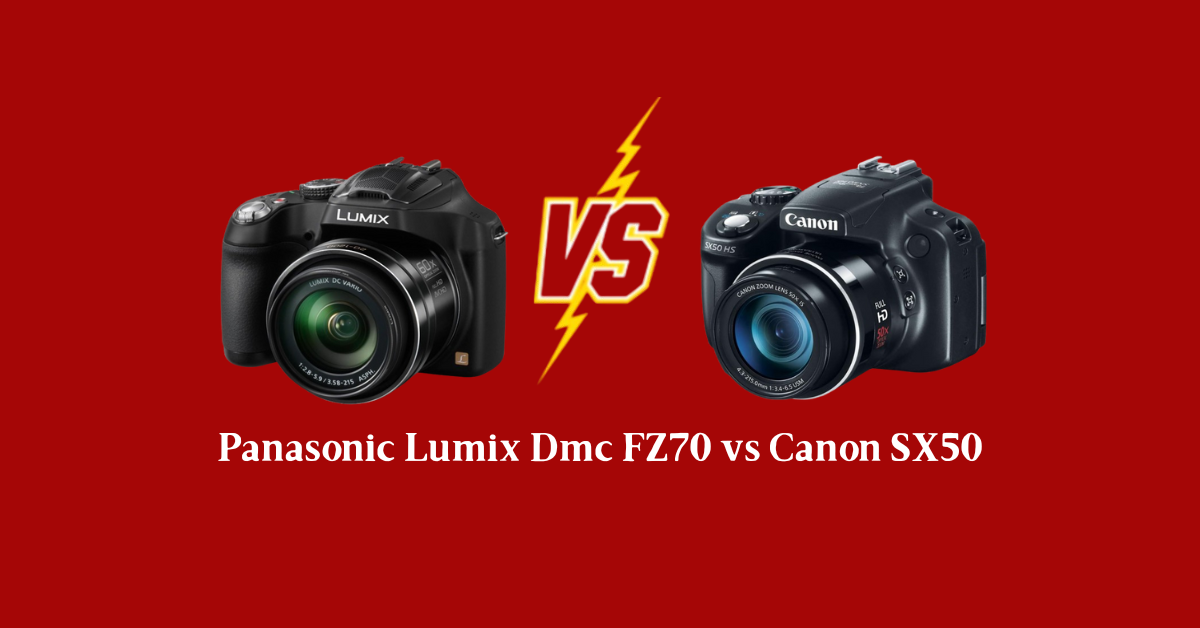
Panasonic FZ70 vs Canon SX50: Superzoom Showdown
Superzoom cameras give photographers the freedom to capture distant subjects without swapping lenses. The Panasonic Lumix DMC-FZ70 and Canon PowerShot SX50 stand out as two powerful options in this category.
The FZ70 boasts an impressive 60x optical zoom and a bright lens that performs well in various lighting conditions. Canon’s SX50 offers a 50x zoom with solid image stabilization and color accuracy that appeals to travel and wildlife enthusiasts.
Both cameras promise versatility, manual controls, and creative shooting modes suited for beginners and hobbyists alike. The FZ70 delivers a wider zoom range and faster burst shooting, while the SX50 focuses on refined color reproduction and crisp image detail.
Their designs reflect different priorities, from ergonomics to feature sets. Comparing their strengths helps reveal which superzoom camera handles everyday adventures, wildlife photography, and distant landscapes with the clarity and control that photographers need most.
Panasonic Lumix DMC-FZ70 vs Canon PowerShot SX50
Bridge cameras sit in a unique position between compact point-and-shoots and interchangeable-lens systems. They attract users who want professional-level zoom, manual controls, and image quality without the bulk of DSLRs. Among these, the Panasonic Lumix DMC-FZ70 and the Canon PowerShot SX50 HS remain two standout models for enthusiasts seeking reach, reliability, and optical excellence.
Both cameras bring exceptional zoom capabilities and impressive imaging engines, but their performance, ergonomics, and video quality differ in subtle ways that matter to serious photographers. This analysis breaks down each camera in depth — exploring features, imaging behavior, and operational design — before offering a full head-to-head comparison.
Panasonic Lumix DMC-FZ70
About This Tool
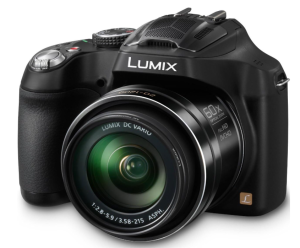
The Panasonic Lumix DMC-FZ70, also known as the FZ72 in some markets, is a superzoom bridge camera designed for photographers who demand extensive focal range and consistent optical performance.
It combines a 16.1-megapixel CMOS sensor with a category-leading 60x optical zoom (20–1200 mm equivalent), powered by Panasonic’s Venus Engine image processor. Its construction reflects Panasonic’s commitment to all-in-one versatility.
The FZ70 integrates a high-resolution 3-inch LCD, Full HD video at 60 i fps, and a dedicated Dolby stereo microphone system that automatically isolates ambient noise during zoom operation. The result is a camera tailored for travelers, birders, and videographers who value portability with extended reach.
Features
The FZ70’s optical system is its strongest feature. The Lumix DC Vario lens employs 14 elements in 12 groups, including aspherical and ED glass, to control chromatic aberrations throughout the zoom range. The 20 mm wide-angle capability allows expansive landscapes, while the 1200 mm telephoto end maintains surprising sharpness for distant subjects.
Panasonic’s Power O.I.S. (Optical Image Stabilization) mitigates camera shake effectively, essential for handheld telephoto work. The camera’s Venus Engine processor improves color fidelity and high-ISO noise reduction, enabling clean images up to ISO 3200 and usable quality at ISO 6400.
A 9 fps continuous burst mode supports fast action, while scene modes and manual exposure settings provide complete control. The camera also includes a Live View electronic viewfinder, built-in stereo mic, and a fixed 3-inch LCD with 460 k dots.
What We Like
-
Massive 60x zoom range delivers unmatched flexibility for wildlife and sports.
-
Strong optical stabilization keeps images sharp even at extreme telephoto.
-
Dedicated stereo microphone enhances audio fidelity during video capture.
-
Full manual control and RAW shooting enable post-processing flexibility.
-
Long battery endurance of up to 400 shots per charge adds reliability for fieldwork.
What We Didn’t Like
-
The LCD resolution (460 k dots) feels dated compared to newer displays.
-
Limited high-ISO performance, typical of small 1/2.3-inch sensors.
-
Fixed screen restricts shooting from unconventional angles.
-
Autofocus tracking occasionally struggles in low-contrast scenes.
My Opinion
The Panasonic FZ70 stands as a robust superzoom camera that favors reach and practicality over luxury ergonomics. It performs consistently across its range, especially in daylight conditions. The combination of optical stabilization and intelligent noise control makes it a dependable choice for users who prioritize zoom reach and video versatility.
Its built-in microphone system is particularly impressive, ensuring balanced sound in demanding environments. For travelers or wildlife photographers who prefer a lightweight yet capable camera, the FZ70 remains an excellent balance between performance and cost.
Canon PowerShot SX50 HS

About This Tool
The Canon PowerShot SX50 HS was Canon’s flagship bridge camera, famous for introducing the world’s first 50x optical zoom (24–1200 mm equivalent) at the time of release.
Built around a 12.1-megapixel CMOS sensor and Canon’s advanced DIGIC 5 image processor, this camera prioritizes clarity, low-light performance, and speed. Its design targets enthusiasts who demand flexibility across shooting scenarios — from handheld telephoto wildlife shots to full-HD video with stereo sound.
The inclusion of RAW capture, High-Speed AF, and Zoom Framing Assist tools positions it as both a learning platform and a serious imaging device.
Features
Canon equipped the SX50 HS with a 12.1 MP back-illuminated CMOS sensor, which provides better sensitivity and reduced noise compared to traditional front-illuminated sensors. The DIGIC 5 processor introduces advanced noise reduction algorithms, maintaining color accuracy even under dim lighting.
The optical zoom system features UD (Ultra-Low Dispersion) elements for chromatic correction across the zoom range. The lens opens to f/2.8 at wide and f/6.5 at telephoto, balancing brightness with optical control.
The camera records Full HD 1080p video at 30 fps with stereo sound and includes High Speed AF that significantly reduces focus lag. Canon’s Zoom Framing Assist helps users maintain moving subjects within the frame during long-zoom shooting — a critical aid for birders and sports photographers.
A 2.8-inch vari-angle LCD and electronic viewfinder provide flexible composition options, while the 13 fps continuous burst rate supports high-action sequences.
What We Like
-
50x optical zoom covers virtually every focal need.
-
High-Speed AF reduces lag and improves response time.
-
Articulating LCD aids in creative composition.
-
RAW support enhances post-production capability.
-
Optical Image Stabilization delivers steady handheld results.
What We Didn’t Like
-
The 12 MP sensor offers lower resolution than competitors in its class.
-
Electronic viewfinder resolution is modest by modern standards.
-
Video bitrate could be higher for more advanced users.
-
Slightly bulkier body than some compact bridge rivals.
My Opinion
The Canon SX50 HS represents a thoughtful integration of optical reach and imaging intelligence. Its autofocus and stabilization systems remain commendable even by current standards. The DIGIC 5 processor demonstrates Canon’s strong color science, rendering natural tones with excellent contrast.
Although the resolution trails behind the Panasonic FZ70, the SX50 HS compensates through low-light efficiency and superior ergonomics. The articulating LCD is particularly valuable for field shooting, while the Zoom Framing Assist simplifies long-distance subject tracking.
This camera remains a favorite among enthusiasts who appreciate Canon’s color accuracy and intuitive control design.
Detailed Comparison Of Panasonic FZ70 vs Canon SX50
Both cameras target the same audience — users seeking extensive zoom capabilities without entering DSLR complexity. Yet their internal architectures and handling differ in meaningful ways.
The Panasonic FZ70 employs a 16.1 MP CMOS sensor, giving it a moderate advantage in resolution. Its Venus Engine produces vivid, high-contrast images with well-balanced white tones. The Canon SX50 HS, with a 12.1 MP BSI CMOS sensor, offers less resolution but better noise control under low light.
Optically, Panasonic’s 60x zoom (20–1200 mm) extends wider than Canon’s 50x (24–1200 mm), providing extra width for landscapes or group shots. Both reach the same telephoto length, but Panasonic’s lens begins at a wider field of view.
In terms of stabilization, both cameras use optical systems — Panasonic’s Power O.I.S. and Canon’s IS — though Canon’s stabilization feels smoother during video panning.
Video capability tilts toward Panasonic. The FZ70 captures Full HD at 60 i fps, while the SX50 HS records Full HD at 30 fps. Panasonic’s frame rate advantage yields more fluid motion, appealing to videographers.
Autofocus behavior favors Canon. The SX50 HS’s High-Speed AF reduces focus delay significantly, while the FZ70’s system is reliable but slightly slower during full zoom. Canon’s articulating LCD provides superior flexibility compared to Panasonic’s fixed screen, though Panasonic’s interface is straightforward and responsive.
Battery life gives Panasonic the edge with approximately 400 shots per charge, compared to Canon’s 315. In field performance, Panasonic’s higher resolution captures more surface detail under bright light, while Canon’s back-illuminated sensor performs cleaner in shaded or indoor environments.
Both models produce natural color, but Canon’s tone mapping is warmer, while Panasonic’s images lean toward neutral accuracy.
FAQs
1. Which camera has better zoom range?
The Panasonic FZ70 has a 60x optical zoom, starting at 20 mm, which is wider than the Canon SX50 HS’s 24 mm starting point. Both extend to 1200 mm at telephoto.
2. Which camera performs better in low light?
The Canon SX50 HS performs better in dim conditions due to its back-illuminated CMOS sensor and efficient DIGIC 5 noise reduction.
3. Does the FZ70 shoot RAW images?
Yes, the FZ70 supports RAW capture, offering greater flexibility during post-processing.
4. Is the Canon SX50 HS good for fast action?
Yes. It delivers up to 13 fps burst shooting, aided by High-Speed AF, making it capable for sports and wildlife.
5. Which camera is better for video recording?
The Panasonic FZ70 leads with 1080/60 i fps video and a dedicated Dolby stereo mic, while the Canon SX50 HS records at 1080/30 fps.
6. Which has the longer battery life?
The FZ70 lasts for about 400 shots, whereas the SX50 HS averages around 315 shots.
7. Which camera feels more professional in use?
Canon’s interface and articulating LCD provide a more advanced handling experience, while Panasonic’s straightforward design benefits casual users.
Conclusion
The Panasonic Lumix DMC-FZ70 and Canon PowerShot SX50 HS showcase two philosophies in bridge-camera design. Panasonic emphasizes extended optical range, video capability, and energy efficiency, while Canon focuses on autofocus precision, low-light performance, and compositional flexibility.
Photographers who prioritize reach, video quality, and wider framing will find the Panasonic FZ70 the stronger all-rounder. Those who prefer dynamic autofocus, color depth, and flexible screen control may prefer the Canon SX50 HS.
Both cameras represent exceptional engineering from their respective brands — compact, feature-rich, and still capable of delivering professional-looking results without the complexity of lens changes or full-frame systems.