How to Use a Makita Circular Saw?
A Makita circular saw helps many people cut wood fast, smooth, and clean. Strong design. Steady power. Easy control. This tool gives confidence to both beginners and experienced workers. Many people feel unsure before their first cut, and that’s normal.
A circular saw moves fast, and the blade looks scary. A bit of guidance fixes that fear. Safe steps, clear instructions, and slow practice turn that fear into skill. This guide shows every step in simple language. No complex words. No confusing ideas. Every step stays direct and practical.
You learn how to set up the saw, adjust your blade depth, set the bevel, hold the saw the right way, guide your cuts, use safety gear, avoid mistakes, and keep your saw clean. All Makita circular saws work with the same basic steps, so this guide fits corded and cordless models.
Every part of this article focuses on real use. Real cuts. Real control. Real safety. You learn how to handle the saw in a way that feels natural, calm, and steady.
What a Makita Circular Saw Does
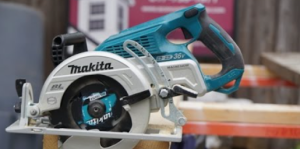
A Makita circular saw spins a round blade at high speed. That blade slices through wood, plywood, MDF, and many other sheet materials. Most Makita saws produce strong torque. The motor keeps the blade steady during the cut. Sharp teeth remove material fast and leave a smooth edge.
A circular saw cuts straight lines. Long lines. Short lines. Edge cuts. Crosscuts. Rip cuts. Angle cuts. The saw works on job sites and home projects. Since the tool moves across the wood, you don’t need a big workstation. You only need a flat surface and enough space to control your cut.
Makita circular saws come in many sizes. The common size is 7-1/4 inches. This size cuts through thick boards in one pass. Smaller saws, like 6-1/2 inch cordless models, feel lighter and easier to carry. All these saws share the same basic controls: a blade guard, a depth lever, a bevel lever, a shoe plate, and a trigger.
Safety Basics Before You Start
Wear the Right Gear
Safe cuts come from good habits. Safety gear does not get in the way. It protects your eyes, hands, and hearing. A few simple items make a big difference.
Wear safety glasses. They stop small chips from hitting your eyes. Wear hearing protection. Circular saws run loud, and long use can hurt your ears. Wear a dust mask during long cutting sessions. Sawdust fills the air fast. Strong shoes give better footing, so you feel more stable while guiding the saw.
Clear the Work Area
A clean work area helps you focus. No loose boards. No cords in the path. No clutter under your feet. A stable work surface keeps the saw steady. Many people use a pair of sawhorses or a firm table. Your board must sit flat so the saw stays balanced. If the board shakes, your cut may wander.
Check the Saw Before Cutting
A quick inspection helps prevent problems. Make sure the blade guard moves smoothly. No sticking. No dragging. A smooth guard returns over the blade after each cut.
Check the blade itself. Sharp teeth cut clean and fast. Dull teeth burn wood and force the saw to work harder. Make sure the battery (for cordless models) has enough charge. A weak battery slows the blade, and a slow blade tears the wood.
Understanding the Main Parts of the Saw
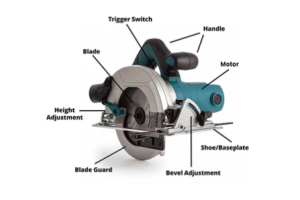
Blade Guard
The blade guard covers the blade for safety. It lifts automatically when the saw meets the wood. After the cut, it returns over the blade. Never lock the guard open. Always let it move on its own.
Shoe Plate (Base Plate)
The shoe plate sits on the surface of the wood. It guides your cut. A flat shoe plate gives straight lines. Makita plates include a sight line at the front so you can follow your cut mark easily.
Depth Lever
This lever adjusts how deep the blade goes into the wood. You want the blade to extend a bit past the bottom of the board. This gives a smooth cut and better control.
Bevel Lever
This lever tilts the shoe plate for angle cuts. Most Makita circular saws tilt from 0 to 45 degrees. Some tilt farther. Straight cuts use a 0-degree bevel.
Trigger and Safety Switch
The trigger starts the blade. A small safety switch prevents accidental starts. You press the safety switch, then squeeze the trigger.
How to Set the Blade Depth
Correct blade depth makes your cut clean and safe. A deep blade grabs more wood than needed. A shallow blade rubs against the board and struggles.
Steps to Adjust Depth
-
Set the saw on a stable surface.
-
Loosen the depth lever.
-
Lower or raise the saw so the blade sticks out about one tooth past the wood.
-
Tighten the lever.
A small blade extension keeps the cut smooth, reduces splintering, and gives better control. Many beginners set the blade too deep. Short depth feels easier and safer.
How to Set the Bevel
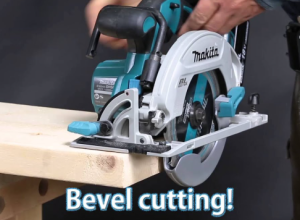
Angle cuts add style and fit to projects. Simple bevel settings make clean angle edges.
Steps to Adjust Bevel
-
Set the saw on a flat surface.
-
Loosen the bevel lever.
-
Tilt the shoe to the desired angle using the scale.
-
Tighten the bevel lever.
Most beginners cut straight lines first. Angled cuts come later. Once you feel comfortable with straight cutting, bevel cuts feel much easier.
How to Mark Your Cut Line
Clear marks guide straight cuts. A simple pencil line works well. Soft lead pencils show clearly on most board surfaces.
Place a speed square or straight edge across the wood. Mark your line. Press the pencil firmly so the line stays clear even after dust gathers. A long cut needs a full line, not just one mark. A continuous line helps your eyes track the cut.
How to Position the Wood for Cutting
Good support prevents the board from pinching the blade. Pinching makes the saw stop suddenly. That sudden stop can make the saw jump.
Place your board on sawhorses. Support both sides, but leave the cutting path clear so the board can fall away from the blade. Never support both ends with the middle cut line in the air. This bends the board and traps the blade.
Check the board for nails, screws, or staples. Metal damages the blade. It also creates sparks and rough cuts.
How to Hold the Makita Circular Saw
A steady grip gives clean results. Many beginners hold the saw too tight. Tight muscles shake. A firm, relaxed grip gives better control.
Place your main hand on the main handle. Your other hand rests on the front knob. Keep your elbows low and steady. Your body stands slightly to the side so the saw does not push back toward you. Feet stay shoulder-width apart. Stable stance. Calm stance. No rush.
Your eyes follow the cut line, not the blade. The blade spins fast. It distracts new users. Keep your focus on your pencil line.
How to Start the Cut
Set the front of the shoe plate on the wood. The blade should float just above the surface. Keep the saw still. Press the safety switch. Pull the trigger. The blade reaches full speed in a moment.
Start moving forward only after the blade reaches full speed. Slow starts cause rough edges. Full speed gives a clean bite into the wood.
Guide the saw forward with steady pressure. Not force. Let the motor do the work. A Makita circular saw has strong torque. You only guide it.
How to Follow the Cut Line
The sight notch at the front of the shoe makes tracking simple. The left side of the notch usually aligns with the blade path. Every Makita model may have slight differences, so check your manual once.
Follow the line with slow, steady motion. Sharp blades cut fast without pressure. If the saw slows down, the blade may be dull or you may be pushing too hard.
A calm rhythm helps. Forward drift. Hold the handle. Watch the line. Simple pattern.
How to Make Long, Straight Cuts
A straight edge or guide rail helps long cuts stay clean. A clamp-on guide works on any board. Place the guide, clamp it, and run the shoe plate along its edge.
Long cuts become easy with this method. No wandering. No shaking. Just smooth progress.
Large sheets like plywood need extra support. They flex easily. Place support boards under the sheet so it stays flat from one end to the other. A flat sheet gives a smooth, straight result.
How to Make Crosscuts
Crosscuts go across the grain. These cuts appear often in framing and trim work. Set the blade depth. Mark your line. Hold the saw in a stable stance.
Start the saw at full speed. Move forward slowly. Crosscuts produce more splinters near the exit side. To reduce splinters, place masking tape over the exit line. The tape holds fibers together.
How to Make Rip Cuts
Rip cuts go along the grain. These cuts feel longer and sometimes harder. A fence guide helps. Many Makita saws include a rip fence that slides into the shoe plate. Set the fence to the distance you want and lock it in place.
Run the saw with the fence pressed against the board edge. The fence keeps the cut straight without a long guide.
How to Cut Plywood Cleanly
Plywood splinters easily. A sharp blade helps a lot. Finer teeth give a smoother edge. Slow speed and calm hands also help.
Place the good side of the plywood facing down. Circular saw blades cut upward, so the bottom side stays cleaner. Tape the top side along the line if you need a cleaner edge on both sides.
How to Handle the End of a Cut
As the blade leaves the wood, the saw feels lighter. Keep your hands steady. Hold the saw straight until the blade is fully past the board. Lift the saw only after the blade stops.
This last step protects the blade guard and keeps the edge clean.
How to Prevent Kickback
Kickback happens when the blade gets stuck. Makita saws reduce this risk with strong motors and smooth guards. A few habits help even more.
• Set the correct blade depth.
• Support the board correctly.
• Keep the blade sharp.
• Avoid twisting the saw during the cut.
• Do not push too hard.
A relaxed grip and steady pace reduce almost every risk.
How to Change the Blade

A fresh blade cuts clean and easy. Many Makita saws include a spindle lock button. This button stops the blade from turning.
Steps for Blade Change
-
Unplug the saw or remove the battery.
-
Press the spindle lock.
-
Loosen the blade bolt with the included wrench.
-
Remove the old blade.
-
Place the new blade with teeth facing the correct direction.
-
Tighten the bolt.
-
Release the lock.
A quick test spin shows that everything sits tight and smooth.
How to Clean Your Makita Circular Saw
Dust gathers fast. Too much dust affects the guard, vents, and shoe plate.
Use a small brush to clean dust after each use. Wipe the shoe plate with a dry cloth. Avoid water on metal parts because moisture causes rust. For cordless models, wipe the battery terminals so they stay clean.
Regular cleaning keeps the saw smooth and safe.
How to Store the Saw Safely
Store your saw in a dry place. Keep it away from damp walls or floors. Many users store their saw in a toolbox or a case. The blade guard must stay closed during storage.
Remove the battery before storing cordless models. This keeps the contacts clean and safe. Corded models should have their cords wrapped loosely, not tightly.
Extra Tips for Better Results
Use the Right Blade for the Job
Wood blades differ from plywood blades. Finer teeth give smoother cuts. Rough blades cut faster but leave rough edges.
Keep Both Hands on the Saw
Two hands give better balance. One hand cuts control in half.
Stand on the Stable Side
Your body stays on the side of the saw, not behind the blade.
Make Practice Cuts
Practice builds skill fast. Cut scrap wood before cutting final pieces.
FAQs
1. What material can a Makita circular saw cut?
A Makita circular saw cuts wood, plywood, MDF, and some plastics. Use the correct blade for each material.
2. Why does the saw burn the wood?
A saw burns wood when the blade gets dull or the depth stays too deep. A sharp blade fixes this issue. Shallow depth also helps.
3. How far should the blade stick out from the board?
The blade should extend about one tooth past the bottom of the board. This gives a clean, smooth cut.
4. Can beginners use a Makita circular saw safely?
Yes. Simple safety steps and calm practice help beginners use it safely. Slow movement and good focus make the process smooth.
5. Does blade speed matter?
Yes. The saw must reach full speed before touching the wood. Full speed gives clean cuts and steady control.
6. How long does a blade last?
A blade lasts longer with clean wood and gentle use. Heavy cuts, nails, or dirty wood shorten blade life.
Final Thoughts
A Makita circular saw becomes easier with each cut. Every step in this guide keeps things simple. Clear markings. Correct depth. Steady grip. Calm speed.
These steps bring smooth, straight, and clean results. Many people worry before their first cut. That fear fades fast once the saw starts moving. Knowledge builds confidence. Practice builds skill.
A circular saw stays strong for many years with simple care. Clean the saw. Check the blade. Store it dry. These habits protect the tool and keep each cut clean.
A Makita saw handles light projects, heavy work, and everything in between. Once you learn the basics, you shape wood with steady control and clear results.