
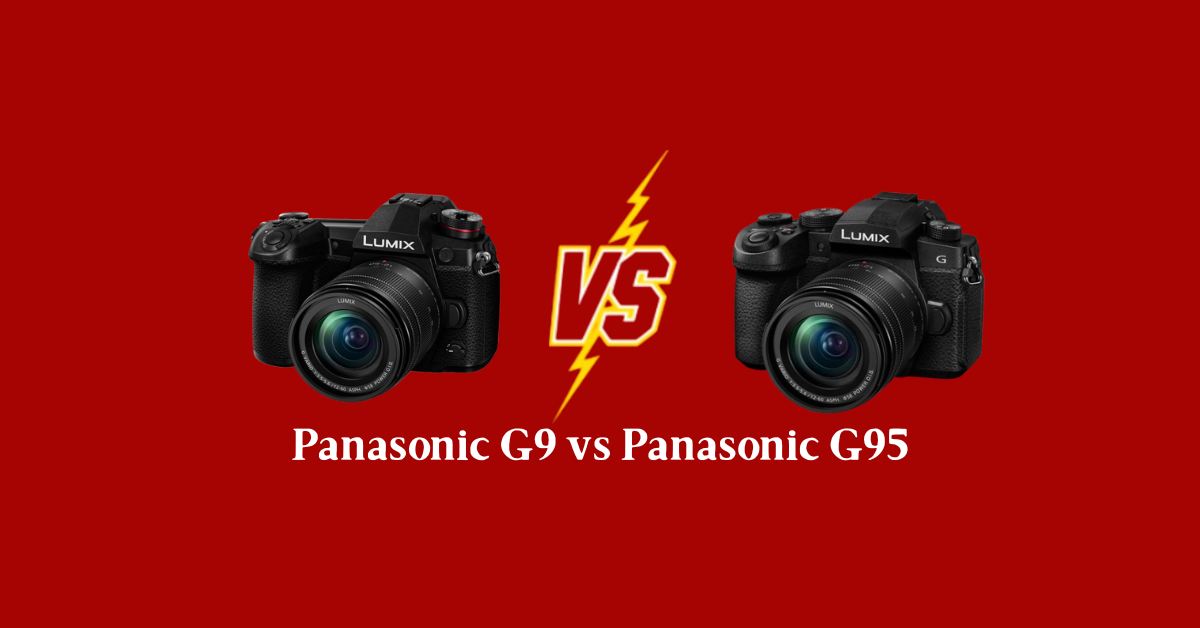
Panasonic G9 vs G95: Which Mirrorless Camera Stands Out?
Panasonic has earned a strong reputation among photographers and videographers who value versatility, performance, and portability. The Panasonic G9 and G95 are two standout options in the brand’s Micro Four Thirds lineup, and both deliver a compelling mix of features for different shooting needs.
The G9 is designed as a powerhouse for action and wildlife photography, offering high-speed performance, advanced image stabilization, and a rugged build that thrives in challenging environments. The G95, on the other hand, strikes a balance between stills and video, appealing to hybrid shooters who want reliable 4K video recording and creative shooting modes without stretching their budget.
Understanding the strengths of each camera helps narrow down the decision between them. This comparison explores their differences in design, image quality, video capabilities, and overall usability to highlight which model better fits a photographer’s or videographer’s style.
Panasonic G9 vs G95: Detailed Comparison
The Panasonic LUMIX G9 and G95 both sit in the Micro Four Thirds lineup, but they serve different users. The G9 aims at professionals who demand rugged performance, advanced video tools, and high-resolution stills. The G95, on the other hand, offers a well-rounded package that suits enthusiasts who want strong image quality, 4K video, and an included lens bundle at a lower price. Below is a detailed breakdown of each model.
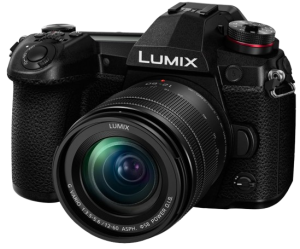
Panasonic LUMIX G9
About This Tool
The Panasonic G9 is a mirrorless camera designed for professional-level shooting. It balances speed, resolution, and durability, making it popular among wildlife, landscape, and action photographers. Its magnesium alloy body withstands rough outdoor use, while its sensor and stabilization deliver high-quality results.
Features
- 20.3MP Micro Four Thirds sensor without low-pass filter
- In-camera 80MP high-resolution mode (JPEG or RAW)
- 5-axis Dual I.S. 2.0 stabilization
- Rugged, splash, dust, and freeze-proof design
- 4K 60p video in 4:2:2 10-bit format
- Slow-motion video up to 180fps in Full HD
- Twin SD card slots with UHS-II support
- USB 3.0, headphone jack, and full-size HDMI port
- Large 3-inch LCD screen and high-quality viewfinder
What We Like
- Superb build quality for outdoor photography
- Extremely effective stabilization for both stills and video
- High-resolution mode provides extra detail for landscapes
- Wide range of ports for professional workflows
- Dual card slots for backup and extended storage
What We Didn’t Like
- Larger and heavier than many Micro Four Thirds cameras
- Price is higher compared to mid-range models
- High-resolution mode requires a tripod for best results
My Opinion
The G9 is a strong choice for serious photographers. It feels reliable in the field, with excellent handling and stabilization that make it a solid all-rounder. Its advanced video specs also appeal to hybrid shooters who switch between stills and video often.
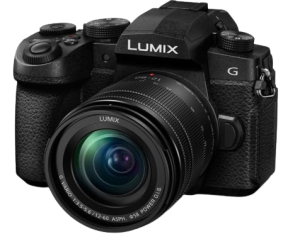
Panasonic LUMIX G95
Product Details
The Panasonic G95 targets enthusiasts who want high-quality images, good video tools, and an affordable entry into the LUMIX system. Unlike the G9, the G95 often comes bundled with a versatile 12-60mm kit lens, memory card, bag, and accessories, making it a ready-to-shoot package.
Features
- 20.3MP Micro Four Thirds MOS sensor
- ISO sensitivity up to 25,600
- 5-axis image stabilization with optical support
- 4K video recording with multiple frame rate options
- Quick and precise autofocus system
- Micro Four Thirds lens mount with wide lens selection
- Compact and lightweight body design
- Bundled kit includes lens, battery, charger, SD card, and bag
What We Like
- Affordable package with lens and accessories included
- Lightweight and portable design
- Strong low-light performance with expanded ISO
- Accurate autofocus for both stills and video
- Versatile lens mount allows for many creative options
What We Didn’t Like
- Video specs less advanced than the G9
- No high-resolution mode like the G9
- Single card slot limits backup options
- Build quality is not as rugged as the G9
My Opinion
The G95 delivers excellent value for beginners and enthusiasts. It offers reliable photo quality, useful video features, and a travel-friendly body. The bundled lens kit makes it easy for new users to get started without extra purchases.
Detailed Comparison: Panasonic LUMIX G9 VS Panasonic LUMIX G95
Both the G9 and G95 use a 20.3MP Micro Four Thirds sensor, producing sharp and colorful images. Yet their designs target different users.
Build and Durability: The G9 has a magnesium alloy body that is splash, dust, and freeze-proof, making it better for demanding conditions. The G95 is lighter and smaller but less rugged, designed for everyday shooting.
Stabilization: The G9 uses Dual I.S. 2.0 with 5-axis correction, making it one of the strongest stabilization systems in Micro Four Thirds. The G95 also includes 5-axis stabilization but at a less advanced level.
Video Performance: The G9 records 4K at 60p with 10-bit color, suiting professional workflows. It also supports slow-motion at 180fps in Full HD. The G95 records 4K video with solid quality but does not match the G9’s advanced bitrates or frame rates.
Storage and Ports: The G9 includes twin SD card slots, USB 3.0, headphone and mic jacks, plus a full-size HDMI port. The G95 comes with a single card slot and fewer connectivity options, though it still supports external microphones.
Lens and Accessories: The G9 is often sold body-only, giving professionals freedom to choose lenses. The G95 usually comes bundled with a 12-60mm lens and accessories, which makes it attractive to beginners or travelers.
Price and Value: The G9 sits at a higher price point, reflecting its pro-level build and features. The G95 is more affordable and often packaged as a complete starter kit.
FAQs
Q1: Which camera is better for professional photography?
The G9, thanks to its rugged build, dual card slots, and advanced video tools.
Q2: Does the G95 support 4K video?
Yes, the G95 records 4K video, but not at the same high frame rate and bit depth as the G9.
Q3: Which camera is lighter to carry?
The G95 is lighter and smaller, making it better for travel.
Q4: Can both cameras use the same lenses?
Yes, both use the Micro Four Thirds lens mount, so lenses are interchangeable.
Q5: Which model has better stabilization?
The G9, with its Dual I.S. 2.0 system, provides stronger stabilization compared to the G95.
Conclusion
The Panasonic G9 and G95 share the same sensor but serve different users. The G9 is built for professionals who need durability, advanced video tools, and high-resolution features. It is rugged, reliable, and well-suited for tough shooting environments.
The G95 is designed for enthusiasts and beginners who want strong performance at a lower cost. It comes ready to shoot with a bundled lens and accessories, making it an excellent entry point into mirrorless photography. For professional-level results and advanced control, the G9 stands out. For affordability, convenience, and travel-friendly design, the G95 is the better pick.


