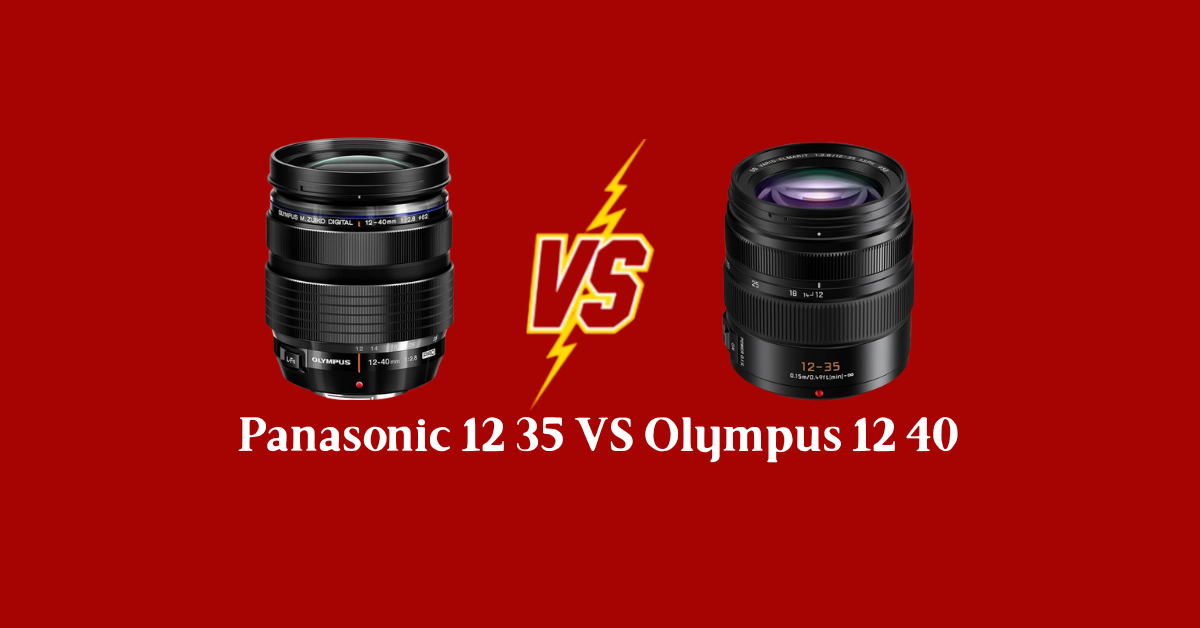
Panasonic 12-35 vs Olympus 12-40: A Battle of Versatile Pro Zooms
Micro Four Thirds shooters often find themselves comparing the Panasonic 12-35mm f/2.8 and the Olympus 12-40mm f/2.8, two lenses that sit at the heart of professional and enthusiast kits. Both cover the classic standard zoom range, deliver constant aperture performance, and promise excellent image quality, yet their design philosophies diverge in subtle but important ways.
Panasonic offers a lighter, more compact lens that pairs beautifully with smaller bodies, making it attractive for travel and video shooters. Olympus takes a slightly different approach with a more robust build, extended zoom reach, and optics that emphasize sharpness across the frame.
Each lens carries its own strengths, and the decision depends on priorities such as portability, video stabilization, or edge-to-edge sharpness. By diving into these differences, photographers can better understand which lens aligns with their creative style and shooting needs, whether that involves capturing stills, filming video, or tackling both with equal passion.
Panasonic 12-35 vs Olympus 12-40: Which one Is The Best For You
Standard zoom lenses are the backbone of any camera system. They cover wide angles for landscapes, mid-range for street and portraits, and short telephoto for detail shots. For Micro Four Thirds users, two options are often compared: the Panasonic LUMIX 12-35mm f/2.8 and the Olympus M.Zuiko 12-40mm f/2.8 PRO.
At first glance, both lenses look similar. Both have a constant f/2.8 aperture, both are weather-sealed, and both cover the most useful everyday zoom range. Yet, the small differences in size, handling, stabilization, and optical design make each one better suited for different photographers. Let’s take a closer look at each lens before comparing them directly.
Panasonic LUMIX 12-35mm f/2.8
About This Tool
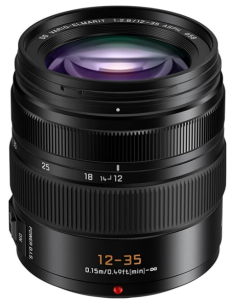
The Panasonic 12-35mm f/2.8 is a compact, premium lens designed with Leica standards. It is built for flexibility, covering a focal range equivalent to 24–70mm on a full-frame camera. This makes it a perfect all-around option for travel, portraits, events, and video. One of its standout features is Power O.I.S., which works with Panasonic camera stabilization (Dual I.S. 2) for smoother photos and video.
Features
-
Focal Length Range: 12–35mm (24–70mm full-frame equivalent)
-
Aperture: Constant f/2.8 across the zoom range
-
Stabilization: Power O.I.S., works with Dual I.S. 2 on Panasonic bodies
-
Autofocus: High-speed, silent operation, with sensor drive up to 240 fps
-
Weight: 306 g (10.7 oz), one of the lightest pro zooms available
-
Build: Dust- and splash-resistant, usable down to -10°C
-
Design: Compact and easy to balance on small Micro Four Thirds cameras
What We Like
-
Extremely light and portable for a professional zoom
-
Built-in optical stabilization is excellent for handheld shooting and video
-
Autofocus is quiet, fast, and accurate
-
Balanced perfectly with Panasonic bodies for video and stills
-
Small enough to use as an everyday lens without feeling bulky
What We Didn’t Like
-
Shorter zoom range compared to Olympus (stops at 35mm)
-
Higher price compared to Olympus 12-40mm PRO
-
Corners can be a little soft at f/2.8, especially at 12mm
My Opinion
The Panasonic 12-35mm f/2.8 feels like a perfect fit for hybrid shooters who value portability. It is a lens that works well in nearly every situation—travel, family events, video production, or even professional jobs where a small kit is needed. The optical stabilization sets it apart for video work, but the high price makes it less appealing for photographers who mainly shoot stills.
Best Use Cases
-
Travel Photography: Small and light, easy to pack and carry everywhere.
-
Vlogging and YouTube: O.I.S. plus quiet autofocus make handheld video smooth.
-
Street Photography: Compact size makes it less noticeable and more discreet.
-
Events and Weddings: Great for handheld shooting in low light thanks to stabilization.
-
General Everyday Lens: Wide enough for landscapes, long enough for portraits.
Olympus M.Zuiko 12-40mm f/2.8 PRO
Product Details
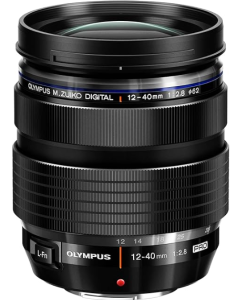
The Olympus 12-40mm f/2.8 PRO was the first lens in Olympus’ PRO line, designed for demanding photographers. It covers a slightly longer zoom range than Panasonic (12–40mm vs 12–35mm) and has a solid all-metal construction. The optical design uses advanced elements to deliver consistent sharpness, even at the edges. The lens also includes a manual focus clutch, giving quick access to manual control, which is useful for professionals.
Features
-
Focal Length Range: 12–40mm (24–80mm full-frame equivalent)
-
Aperture: Constant f/2.8 across the entire zoom range
-
Build: All-metal construction, splash-proof, dust-proof, and freeze-proof
-
Focus: Manual focus clutch for fast switching between auto and manual modes
-
Minimum Focus Distance: 20 cm, great for close-up and detail shots
-
Optical Design: 14 elements in 9 groups, with ED, HR, and aspherical lenses
-
Weight: 382 g (13.5 oz), heavier than the Panasonic lens
-
Accessories: Includes hood, pouch, and protective caps
What We Like
-
Slightly longer zoom reach, helpful for portraits and tighter framing
-
Excellent sharpness across the frame, even wide open
-
Strong, durable build with full metal construction
-
Close focusing ability makes it useful for semi-macro shots
-
More affordable than the Panasonic 12-35mm
What We Didn’t Like
-
Heavier and bulkier compared to Panasonic 12-35mm
-
No built-in optical stabilization, relies on camera IBIS
-
Autofocus can be a little noisier during video recording
My Opinion
The Olympus 12-40mm f/2.8 PRO is a lens built for serious photographers who want sharp images and tough construction. It feels reliable in any environment—rain, dust, or even snow. The lack of optical stabilization is not a big issue for Olympus camera users because their IBIS is excellent. For Panasonic users, though, this might be a downside. Overall, it offers great value for the price and delivers professional results.
Best Use Cases
-
Landscape Photography: Edge-to-edge sharpness makes it perfect for wide scenes.
-
Portraits: The 40mm end gives more natural perspective for portraits.
-
Close-Up Shots: Minimum focus distance of 20 cm works well for food, flowers, and product shots.
-
Outdoor Adventure: Rugged build makes it dependable in tough conditions.
-
Event Photography: Sharp, versatile, and reliable for weddings and gatherings.
Detailed Comparison Of Panasonic 12-35 vs Olympus 12-40
Both lenses are professional-grade standard zooms with constant f/2.8 aperture, but they target slightly different users. The Panasonic 12-35mm is lighter, smaller, and includes optical stabilization.
This makes it a great match for video shooters and travel photographers. It balances well on smaller Panasonic bodies and works best in handheld situations where stability is important. The tradeoff is a higher price and a shorter zoom range. The Olympus 12-40mm PRO offers stronger optical sharpness, a tougher all-metal body, and slightly more zoom reach.
It lacks stabilization, but Olympus camera users benefit from strong IBIS anyway. It’s heavier but more affordable, making it an attractive choice for photographers who want value without losing image quality. To put it simply: Panasonic feels like a video and travel lens, while Olympus feels like a still photography workhorse.
FAQs
Q1: Which lens is sharper overall?
Olympus 12-40mm has more consistent sharpness across the frame, even at the corners.
Q2: Which is better for handheld video?
Panasonic 12-35mm because of built-in stabilization and quiet autofocus.
Q3: Do both lenses fit Panasonic and Olympus cameras?
Yes, both use the Micro Four Thirds mount and are cross-compatible.
Q4: Which lens is more compact for travel?
Panasonic 12-35mm is lighter and smaller, better for long days of shooting.
Q5: Which lens is better for close-ups?
Olympus 12-40mm, thanks to its 20 cm minimum focus distance.
Q6: Which one gives better value for money?
Olympus 12-40mm is usually cheaper while offering superb image quality and durability.
Conclusion
The Panasonic 12-35mm f/2.8 and Olympus 12-40mm f/2.8 PRO are two of the best standard zooms for Micro Four Thirds cameras. Both deliver professional results, but they serve different needs.
-
Panasonic is ideal for video shooters, travelers, and hybrid creators. Its lightweight design, quiet autofocus, and built-in stabilization make it perfect for handheld use.
-
Olympus is ideal for photographers who want sharp images, rugged build, and more zoom reach. It shines in landscapes, portraits, and close-up work, while also costing less.
Both are excellent. The decision comes down to your style. Do you shoot more video or travel often? Panasonic fits you better. Do you shoot mainly stills and want value and durability? Olympus is the way to go.