
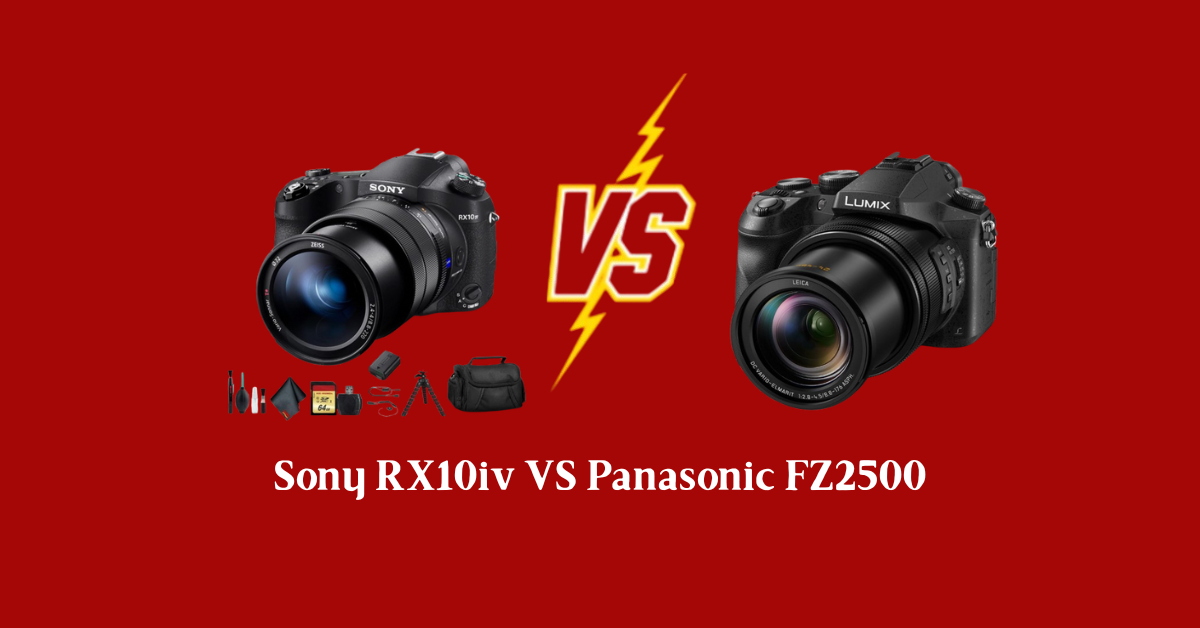
Sony RX10 IV vs Panasonic FZ2500 [Power Zoom Cameras Face Off]
Cameras like the Sony RX10 IV and Panasonic FZ2500 combine DSLR-style control with all-in-one convenience. Both models appeal to photographers who want serious zoom range, excellent image quality, and advanced video features without carrying multiple lenses.
The Sony RX10 IV delivers a fast 24-600mm zoom lens, blazing autofocus, and class-leading burst speed for action and wildlife. The Panasonic FZ2500 focuses on video versatility with features that attract filmmakers, including unlimited recording and built-in ND filters.
Each camera offers a different balance between speed, range, and creative control, making the choice depend on shooting priorities. The RX10 IV dominates in tracking fast subjects, while the FZ2500 shines in cinematic production and manual control.
Both cameras prove that bridge models can compete with interchangeable-lens systems, offering a complete creative package for those who want professional results in a single, powerful body.
Sony RX10 IV vs Panasonic Lumix FZ2500: Which Camera Fits You?
Many photographers and videographers seek a camera that can handle both stills and motion without the hassle of swapping lenses. The Sony RX10 IV and the Panasonic Lumix FZ2500 both aim at that goal.
Each offers a large one-inch sensor, a built-in zoom lens, and 4K video capability. Yet each chooses a different strength. The RX10 IV focuses on extreme zoom and speed. The FZ2500 emphasizes video controls and cinema-style tools. This article digs into their specs, features, and real-world use to help you decide which one matches your style.
Sony RX10 IV
![Sony RX10 IV vs Panasonic FZ2500 [Power Zoom Cameras Face Off]](https://properdiypro.com/wp-content/uploads/2025/11/Sony-Cyber-Shot-DSC-RX10-IV-Camera-DSCRX10M4-B-with-Soft-Bag-Additional-Battery-64GB-Memory-Card-Card-Reader-Plus-Essential-Accessories-Renewed-300x267.png)
About This Tool
The Sony RX10 IV merges a one-inch 20.1 MP sensor with a ZEISS 24-600mm (35mm equivalent) f/2.4-4 zoom lens. That zoom gives plenty of reach for wildlife, sports, travel, or just versatile daily shooting. The camera also delivers strong video features including 4K and high-speed slow motion. Real-world testers say the autofocus is very fast and reliable.
Features
-
20.1 MP 1-inch Exmor RS BSI stacked sensor
-
ZEISS Vario-Sonnar T* lens, 24-600 mm equivalent (25x)
-
Aperture f/2.4-f/4 across zoom range
-
4K movie recording with full pixel readout, and slow motion up to 960 fps in HD Video maker
-
Fast Hybrid AF system: 315 phase-detection points + contrast detect
-
2.36 M-dot EVF, 3.0″ tilting LCD
-
Built-in WiFi/NFC for sharing and remote control
-
Rugged magnesium alloy body, weather-sealed (to a degree)
What We Like
-
The zoom reach is exceptional. One reviewer travelled with it and found “The 24mm to 600mm lens is truly superb … 570mm down to 24mm, it is an amazing lens.”
-
Autofocus is very fast and reliable, especially for moving subjects or video zooming.
-
Video quality in 4K is sharp, with rich detail. One review said “I dare anybody to tell the difference between the RX10 IV files and those coming out of most DSLRs.”
-
Still image quality is strong for a bridge camera. Real-world testers at high ISOs found the RX10 IV “look great” even up to ISO 12,800.
What We Didn’t Like
-
Size and weight: Real users say it is “a bit large and heavy for extending holding” and “the camera is a bit large …”
-
Low-light performance is still limited by the one-inch sensor. One user said: “In broad daylight … it’s quite perfect for me. But… I found it not great for portrait, hard to get a proper bokeh effect … Also … very weak in the evening.”
-
No built-in ND filter (some competitors offer this).
-
The articulating screen is tilting but not fully swiveled, which reduces flexibility for some video angles.
My Opinion
The Sony RX10 IV is a powerhouse for still photographers who also want solid video without changing lenses. The zoom range is amazing — you can cover wide landscapes and far-away subjects with one camera. The autofocus and video features elevate it for hybrid shooters. If you mostly shoot in daylight or with good light, this camera will serve you very well. For heavy video production or low-light specialist work, it may show some limits. But for many creators it strikes the right balance of stills + video + zoom.
Panasonic Lumix FZ2500
![Sony RX10 IV vs Panasonic FZ2500 [Power Zoom Cameras Face Off]](https://properdiypro.com/wp-content/uploads/2025/11/Panasonic-LUMIX-FZ2500-4K-Point-and-Shoot-Camera-20X-LEICA-DC-VARIO-ELMARIT-F2.8-4.5-Lens-21.1-Megapixels-1-Inch-High-Sensitivity-Sensor-422-10-bit-HDMI-Out-DMC-FZ2500-300x270.png)
Product Details
The Panasonic Lumix FZ2500 packs a 1-inch 20.1 MP sensor and a Leica-branded 24-480mm equivalent (20x) f/2.8-4.5 zoom lens. What makes it stand out is the cinema-friendly video features: unlimited 4K recording, built-in ND filters, 10-bit 4:2:2 HDMI output, and a strong manual control layout. Real-world reviews show it performs very well for video work.
Features
-
20.1 MP 1-inch High Sensitivity MOS sensor
-
Leica DC Vario-Elmarit lens, 24-480mm equivalent (20x)
-
Bright aperture f/2.8-4.5
-
Internal ND filter(s) for exposure control
-
4K Ultra HD video (2160p), time code, 10-bit 4:2:2 HDMI out
-
5-axis hybrid optical/digital stabilization
-
Fully articulated LCD screen, external mic & headphone jacks
-
Fast autofocus for its class and very good still performance in daylight
What We Like
-
Video controls are deep: ND filters, log profiles, clean HDMI output make it ideal for serious video operators. One review said: “Unlimited recording time for 4K video … external mic & headphone jacks … many advanced video recording features.”
-
Excellent all-round image quality for a zoom camera. Reviewers found good detail and reliable autofocus.
-
The build feels comfortable and stable; works well for handheld filming thanks to articulation and stabilization.
-
For creatives who shoot both video and stills, this camera offers strong value in a fixed-lens body.
What We Didn’t Like
-
Zoom range is shorter than Sony’s (20x vs 25x approx) so less reach for distant subjects.
-
Aperture drops off at telephoto end (f/4.5) which limits low-light performance at longer zoom. Real-world reviews noted softness at the long end and some chromatic aberration.
-
Autofocus in continuous tracking mode at telephoto can slow down. One review:
-
“Continuous AF can be sluggish, especially at full telephoto and on fast-moving subjects.”
-
Battery life is modest given the video features.
-
For pure still-photography at long distances, it may fall short of dedicated zoom DSLR/ mirrorless setups.
My Opinion
The Panasonic FZ2500 appeals most to creators who shoot video and stills, with video being a major part of their work. If you film interviews, documentaries, or YouTube content and want strong built-in tools without switching lenses, this is a smart pick. It handles stills very well too, though not with the extreme zoom reach of the Sony.
If your use skews more to photography in wildlife or long-range subjects, you might miss the extra zoom. But for hybrid photo-video use with strong manual control and one-lens convenience — it stands out.
Detailed Comparison of Sony rx10 iv VS Panasonic fz2500
Both the Sony RX10 IV and Panasonic FZ2500 share many strengths: large one-inch sensors, integrated high-quality zoom lenses, 4K video, and fixed-lens convenience. Yet they differ in their focus and therefore in which kinds of users they suit.
Zoom & Reach
Sony leads here: its 24–600mm equivalent zoom gives more reach. That means you can get closer to wildlife, sports or distant subjects without moving. Multiple users reported success using it for travel and wildlife. Panasonic stops at 480mm equivalent, which is still very good but less extreme. If you rarely need extreme telephoto, that may not matter.
Video Capabilities
Panasonic clearly edges ahead in video features. The FZ2500 offers unlimited 4K recording (no clip time limit in many modes), built-in ND filter(s) for sunny outdoor filming, 10-bit HDMI output and more control over picture profiles.
Real-world users used it for streaming and found the features valuable. The Sony RX10 IV shoots excellent 4K, and has high frame-rate slow motion up to 960fps, but lacks some of the pro-video controls and ND filter built-ins that Panasonic offers. Real users note excellent 4K quality but also limitations for heavy video work.
Autofocus & Speed
Sony’s autofocus is very fast thanks to its 315-point phase detect AF system (uncommon in fixed-lens / bridge cameras). Reports show excellent tracking of moving subjects. Panasonic’s autofocus is competent and fast in many cases, but when tracking fast moving subjects at long zoom it lags behind a bit. Imaging Resource So for wildlife, sports, or anything where you track motion, Sony may have the advantage.
Low-Light & Aperture
Because of the one-inch sensor size, both cameras have limits compared to larger-sensor systems. Real-world users of Sony noted decent high ISO performance but still limited in evening or very low light.
Panasonic also shows good performance but the aperture drops at the telephoto end which reduces low-light ability at long zooms. The Economic Times+1 If low-light photography is a major concern, neither matches a full-frame camera, but for their class they do well.
Handling & Build
Sony offers a rugged build, dedicated rings for zoom, focus, and aperture, and a near-SLR feel. Some users found it heavy for long handheld use. Panasonic offers substantial video controls, articulating screen, and comfortable grip for video work — often better for filmmakers. For everyday travel carrying, size and weight might matter: one user said Sony was “used almost exclusively” on a three-week trip.
Image Quality for Stills
Both produce strong stills. Sony’s lens gives excellent sharpness across the zoom. One reviewer said results looked like DSLR output. Panasonic’s stills are very good, especially in good light, but some test labs noted softness at the long end and heavy sharpening artefacts. Shutterbug For keen photographers who will crop heavily or print large, Sony may have an edge.
Value & Use-Case
If you want one camera that you carry on travel, want high reach for photos (wildlife, sports), and want decent video, Sony RX10 IV offers a terrific all-rounder with zoom power. If you are more video-focused — filming interviews, doing YouTube, documentaries, needing manual controls, ND filters, clean outputs — the Panasonic FZ2500 is arguably the better fit.
FAQs
1. Which is better for wildlife and distant subjects?
Sony RX10 IV wins due to longer zoom (24–600mm equivalent) and faster autofocus tracking.
2. Which is better for video production?
Panasonic FZ2500 leads with professional video features (ND filters, 10-bit HDMI, unlimited recording, log profiles).
3. Can either shoot RAW stills?
Yes, both support RAW still image capture for better editing flexibility.
4. Which is lighter and more portable for travel?
The Panasonic FZ2500 weighs less (~915 g body) compared with Sony’s ~1.1 kg+ body. For long travel days, Panasonic may feel a bit easier.
5. How do they perform in low light?
Both have one-inch sensors, so low light is better than compact cameras but not as good as APS-C or full frame. The Sony performs well at high ISO for its class, but real users still note limitations. Panasonic performs well in moderate light but loses some performance at longer zooms and higher ISO.
6. Which one would I pick for hybrid stills + video?
If you shoot mostly stills with some video, Sony RX10 IV likely. If you shoot lots of video with some stills, Panasonic FZ2500 likely.
7. Do they have microphone & headphone jacks?
Panasonic FZ2500 includes mic and headphone jacks and better video I/O. Sony RX10 IV has mic input but headphone monitoring may be limited depending on model/version.
Conclusion
Both the Sony RX10 IV and Panasonic Lumix FZ2500 deliver high performance in the fixed-lens bridge camera class. They shrink the gap between all-in-one cameras and interchangeable-lens systems. Your choice comes down to what you shoot most.
Choose the Sony RX10 IV if you:
-
Want the longest zoom reach in one lens
-
Track action, wildlife or sports
-
Prefer fast autofocus and multiple use-cases
-
Shoot stills frequently and video sometimes
Choose the Panasonic Lumix FZ2500 if you:
-
Prioritise video production and control
-
Need features like ND filters, log profiles, clean HDMI out
-
Shoot interviews, documentary, hybrid photo-video content
-
Are comfortable with somewhat less zoom reach but more video tools
Both are strong. What matters most is which tool fits your workflow. Use this to match your priorities — reach & speed vs video control & flexibility — and you’ll land on the right camera for you.


