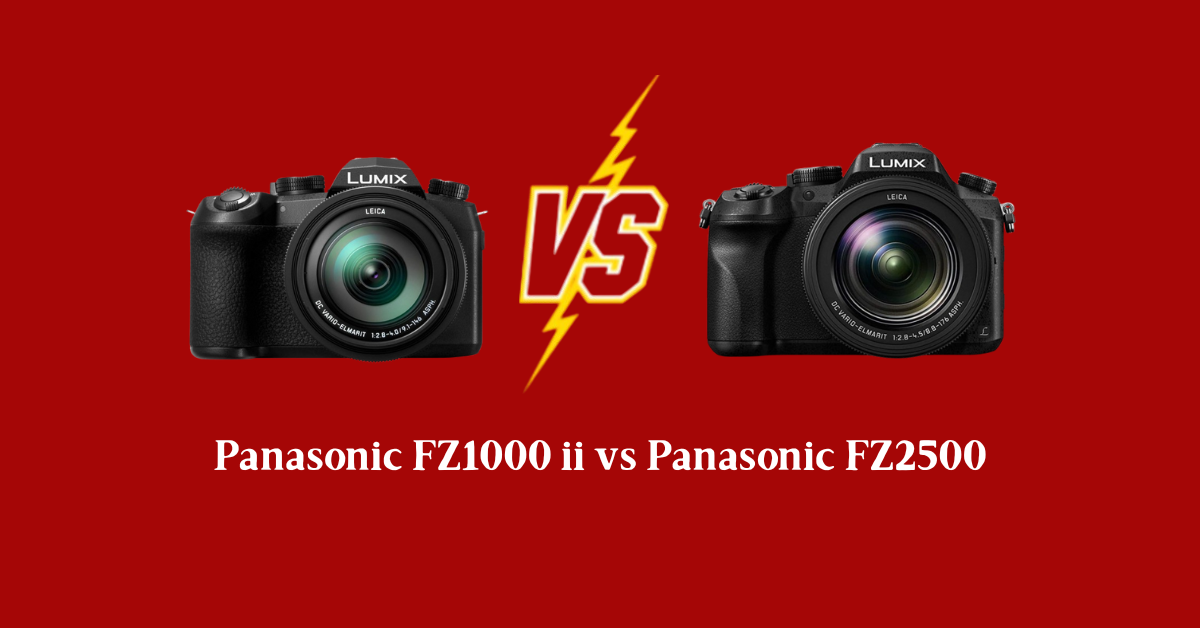
Panasonic FZ1000 II vs FZ2500: Which Camera Offers Better Performance?
Panasonic’s FZ1000 II and FZ2500 stand out as two powerful all-in-one cameras built for creators who value versatility and control. Both models feature a large 1-inch sensor, fast zoom lens, and impressive 4K video recording, making them ideal for travel, events, and creative projects.
The FZ1000 II focuses on efficiency and ease of use, giving sharp images and fast autofocus in a compact design. The FZ2500 takes things further with advanced video tools, extra frame rate options, and an internal ND filter that appeals to serious videographers.
Each camera delivers strong performance, but their strengths differ based on shooting needs. The FZ1000 II fits users who want speed and simplicity, while the FZ2500 caters to those who demand professional-level video control.
Comparing their features helps photographers and filmmakers decide which model offers the right mix of quality, flexibility, and creative freedom.
Panasonic FZ1000 II vs FZ2500: Which Lumix Camera Delivers More?
Panasonic’s Lumix FZ series has long been a top choice for creators who want DSLR-level performance in a compact, all-in-one camera. Both the Panasonic FZ1000 II and FZ2500 promise professional results without the need to swap lenses.
These two bridge cameras share many similarities — large 1-inch sensors, Leica lenses, and powerful 4K video features — yet they target slightly different types of users. The FZ1000 II leans toward photographers who want excellent still image quality, while the FZ2500 adds deeper video tools for filmmakers.
This comparison looks closely at their design, features, performance, and real-world usability. You’ll learn how each camera handles photography, videography, image stabilization, autofocus, and overall value.
Whether you shoot portraits, landscapes, or cinematic videos, this detailed review will help you decide which Lumix model deserves a place in your gear bag.
Panasonic LUMIX FZ1000 II
About This Tool
The Panasonic Lumix FZ1000 II is a powerful bridge camera built for enthusiasts who want excellent photos and videos without carrying multiple lenses. It features a large 1-inch 20.1MP CMOS sensor paired with a Leica DC Vario-Elmarit 25–400mm F2.8–4.0 lens, giving it the flexibility to shoot wide landscapes or distant subjects with clarity.
Its design focuses on balance — fast operation, sharp images, and reliable 4K video. Panasonic improved the display, added better touch controls, and included more creative shooting modes. The result is a versatile hybrid camera suited for travelers, vloggers, and hobbyists.
Features
-
20.1MP 1-inch MOS sensor for clear, detailed images.
-
16x optical zoom Leica DC lens (25–400mm equivalent).
-
4K UHD video recording at 30p or 24p.
-
5-Axis Hybrid Optical Image Stabilization reduces shake.
-
3-inch 1.24M-dot touch LCD with full articulation for flexible angles.
-
High-resolution 2.36M-dot OLED viewfinder for bright, crisp framing.
-
4K PHOTO Mode captures 30 fps bursts for perfect action shots.
-
Bluetooth and Wi-Fi for easy file sharing.
-
Zoom Compose Assist to help track moving subjects.
-
Auto Marking Function for quick photo selection from 4K sequences.
What We Like
The FZ1000 II impresses with its image quality and handling. The 1-inch sensor produces detailed photos with rich colors, even in low light. The Leica zoom lens is sharp and versatile, handling everything from portraits to wildlife.
Its 4K video capability makes it great for hybrid creators. You can shoot smooth 4K footage and pull still frames later. The rotating touch screen adds comfort for vlogging and low-angle shooting. The autofocus is fast, and the image stabilization works well during handheld video recording.
Battery life is decent for a camera of this type, and the controls feel intuitive. The body feels solid without being too heavy, making it ideal for travel.
What We Didn’t Like
The FZ1000 II lacks built-in ND filters, which makes video shooting in bright light a bit tricky. You’ll need external ND filters for smooth motion. Also, while 4K video looks great, there’s a 30-minute recording limit, which may frustrate serious videographers.
Another minor drawback is the limited slow-motion options and no microphone or headphone jack for advanced audio work. The menu system, while improved, can still feel crowded for new users.
My Opinion
The Panasonic FZ1000 II is perfect for photography-first users who want excellent image quality with solid 4K video features. It feels balanced — not too complex but capable enough for creative control. For travel, family events, or YouTube content, it performs beautifully.
If your main focus is still photography with occasional video, the FZ1000 II delivers professional-level results without the complexity or cost of a mirrorless setup.
Panasonic LUMIX FZ2500
About This Tool
The Panasonic Lumix FZ2500 takes the FZ1000 II’s hybrid concept and expands it for video creators. Built with professionals in mind, this bridge camera combines a 20.1MP 1-inch sensor with a 20x Leica DC Vario-Elmarit F2.8–4.5 lens. It’s designed for users who need deep video control and flexible photo performance.
It includes advanced filmmaking tools such as CINELIKE D/V color profiles, V-Log upgrade support, ND filter control, and unlimited video recording time. It even allows external output via HDMI for cleaner recording.
Features
-
20.1MP 1-inch MOS sensor for clear stills and 4K videos.
-
20x optical zoom Leica lens (25–480mm equivalent).
-
Built-in ND filter for better exposure in bright light.
-
4K UHD video recording at up to 200 Mbps (MOV, MP4, LPCM).
-
CINELIKE D and CINELIKE V profiles for cinematic tones.
-
Unlimited recording time and live HDMI output (4:2:2 10-bit).
-
5-Axis Hybrid O.I.S.+ for smooth handheld shooting.
-
Manual and custom video controls including focus stacking.
-
Built-in Wi-Fi for remote operation and file transfer.
-
V-Log L upgrade option for professional-grade color grading.
What We Like
The FZ2500 is a videographer’s dream in a compact body. Its built-in ND filter and unlimited recording make it perfect for long interviews, documentaries, or travel videos. The color science with CINELIKE profiles delivers a cinematic look without external grading.
Its autofocus performs well for both stills and motion. The 5-axis stabilization provides steady results even when walking. The zoom lens is versatile and maintains great sharpness across the range.
The controls are clearly designed with filmmakers in mind — customizable buttons, a larger grip, and logical menu placement. You can shoot professional-level videos straight out of the camera.
What We Didn’t Like
The FZ2500 is larger and heavier than the FZ1000 II, making it less convenient for long handheld shooting or travel. Its screen resolution is lower, and it lacks the latest touch sensitivity improvements found in newer cameras.
Also, some users might find the price higher for a camera that doesn’t support interchangeable lenses. For pure photographers, the extra video features might not justify the cost.
My Opinion
The FZ2500 feels like a mini cinema camera disguised as a bridge model. For video creators, it’s hard to beat its depth of control, professional color profiles, and ND filters. It handles complex video work easily and still delivers great still photos.
If you shoot mostly video — interviews, YouTube content, or short films — the FZ2500 offers tools that the FZ1000 II simply can’t match.
Detailed Comparison: Panasonic FZ1000 II vs FZ2500
Both cameras share Panasonic’s 1-inch 20.1MP sensor, so image quality for stills is nearly identical. Colors are vibrant, dynamic range is strong, and low-light performance is impressive. Yet, their differences lie in usability and video capabilities.
The FZ1000 II has a slightly faster lens at wide angles (F2.8–4.0) and a bit longer reach at 400mm. It’s lighter, easier to carry, and faster for quick still photography. It’s ideal for users who shoot mainly photos and want smooth 4K clips occasionally.
The FZ2500, on the other hand, expands the creative space for filmmakers. Its built-in ND filters, unlimited 4K recording, and CINELIKE color profiles make it more video-oriented. The ability to record at higher bitrates (up to 200 Mbps) gives professional control during post-production.
In terms of handling, the FZ2500’s grip feels better during long shoots, and its controls are more advanced. But the FZ1000 II wins on portability and battery efficiency.
Autofocus speed is similar on both, though the FZ2500 handles focus transitions more smoothly in video mode. For photographers, both deliver crisp details, fast continuous shooting, and reliable stabilization.
For videography, the FZ2500 clearly leads. It’s built for filmmakers who want a run-and-gun camera without external rigs. For photography, the FZ1000 II provides a simpler, lighter option with similar image quality at a lower cost.
Who Should Buy Which?
-
Buy FZ1000 II if you mainly take photos and shoot occasional 4K clips. It’s easier to carry, less expensive, and offers stunning image quality.
-
Buy FZ2500 if you prioritize video creation. Its tools — ND filter, unlimited recording, and color control — are made for serious videography.
FAQs
1. Do both cameras shoot 4K video?
Yes, both record 4K UHD video. The FZ1000 II limits recording to 30 minutes, while the FZ2500 offers unlimited recording with higher bitrate and advanced controls.
2. Which camera has better zoom?
The FZ2500 has a longer 20x optical zoom, while the FZ1000 II offers 16x. The difference is small but noticeable for wildlife or sports.
3. Are these cameras good for beginners?
Yes, both are user-friendly. The FZ1000 II is easier for new users, while the FZ2500 may require more understanding of manual video settings.
4. Can I use external microphones?
The FZ2500 supports external mics for professional audio. The FZ1000 II does not, which limits its sound recording quality for video projects.
5. Which one is better for travel?
The FZ1000 II is lighter, more compact, and simpler to operate. It’s ideal for travel and everyday use.
6. Are both cameras good in low light?
Yes, both have a large 1-inch sensor that performs well in low light. The FZ1000 II’s slightly brighter aperture gives it a small edge at wider angles.
7. Do both support RAW photography?
Yes, both cameras support RAW shooting for better post-processing flexibility.
Conclusion
The Panasonic FZ1000 II and FZ2500 share the same DNA — powerful sensors, Leica lenses, and reliable 4K capability. Yet, they cater to different creative needs.
The FZ1000 II shines for photographers who value simplicity, excellent image quality, and compact size. It captures sharp photos and smooth 4K clips with ease, making it perfect for travel and everyday photography.
The FZ2500 is built for creators who live in the world of video. With ND filters, higher bitrates, and unlimited recording, it’s a strong choice for filmmakers, vloggers, and content producers.
Both cameras prove why Panasonic remains a leader in hybrid imaging. The decision depends on your main focus — photos or video. For pure photography, go with the FZ1000 II. For serious videography, invest in the FZ2500 and unlock greater creative freedom.