
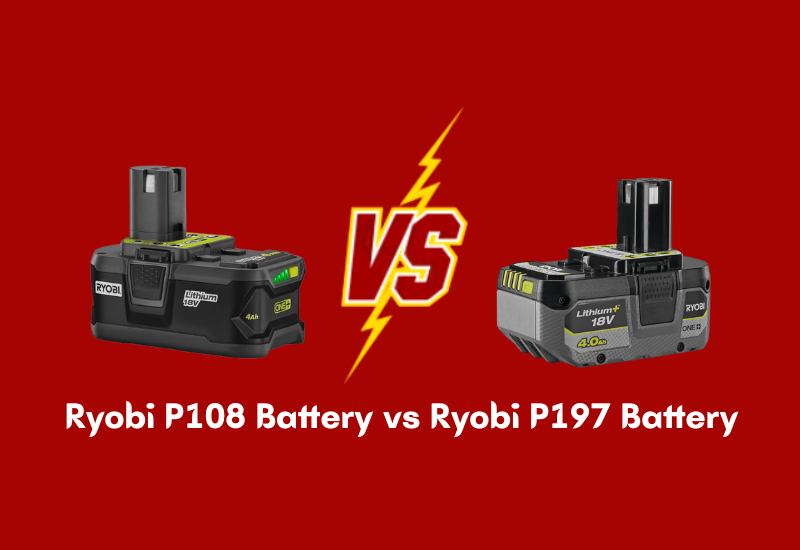
Ryobi P108 vs P197: A Head-to-Head Battle of Power and Performance
Ryobi’s 18V ONE+ battery lineup has become a favorite for DIYers and professionals who demand reliable cordless power. Two of the most talked-about options are the P108 and the P197, each promising strong performance and long-lasting energy.
At first glance, both batteries appear nearly identical, which often leaves tool users wondering what truly sets them apart. The P108 has been on the market longer, earning a reputation for durability and solid run time. The P197, on the other hand, entered the scene as an upgraded version with subtle but important refinements aimed at enhancing efficiency and convenience.
Understanding these differences can save time, money, and frustration while ensuring the right battery ends up in your toolbox. This comparison breaks down design, performance, and practical benefits so you can decide which battery aligns best with your projects and style of work.
Ryobi P108 vs P197: Which Battery Should You Buy?
Power tool batteries are the heart of every project. A good battery means more working time, less waiting, and reliable power output. Ryobi is one of the most trusted names in cordless tools, and its One+ battery system is designed to run across dozens of tools.
Two popular models in this line are the Ryobi P108 and the Ryobi P197. At first glance, both look similar. They are 18V lithium-ion batteries with 4.0Ah capacity. Still, there are differences that matter depending on the type of work you do.
This guide breaks down both batteries in detail, with features, pros, cons, and real opinions. By the end, you’ll know which one fits your needs better.
Ryobi P108 Battery
About This Tool
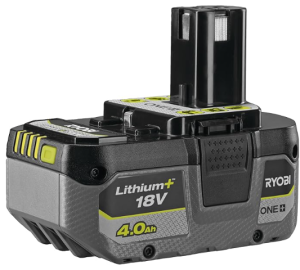
The Ryobi P108 is part of the One+ family and is often called the “workhorse” battery. It was designed as a high-capacity option to replace smaller packs in the lineup. With a 4.0Ah rating, it provides more runtime than compact packs like the P102 or P104. It fits seamlessly into any Ryobi One+ 18V tool, from drills to blowers.
This battery has been on the market since 2013 and has built a strong reputation for reliability. Many users still prefer it because of its balance between cost, runtime, and quick charging.
Features
-
Voltage and Capacity: 18V power with 4.0Ah capacity for extended runtime.
-
Compatibility: Works with over 70 Ryobi One+ tools, including saws, drills, blowers, and yard tools.
-
Charging Speed: Can recharge fully in as little as 60 minutes with the right charger.
-
Fuel Gauge: Simple push-button indicator that shows remaining charge.
-
Fade-Free Power: Runs at full strength until completely drained, without the slow drop in performance.
-
Build Quality: Solid design weighing 1.79 pounds, with durable plastic and metal casing.
What We Like
-
Longer runtime compared to compact packs.
-
Quick charging keeps downtime low.
-
Strong and consistent power output.
-
Simple fuel gauge helps track charge.
-
Works with a wide range of tools, from light to heavy-duty.
What We Didn’t Like
-
Heavier than compact batteries, which adds weight to handheld tools.
-
Higher price than smaller models in the lineup.
-
Charger usually sold separately.
My Opinion
The P108 feels reliable and powerful. For someone who often works with drills, saws, or yard tools, the quick charging and long runtime are impressive. It may feel a little heavy during long sessions with a drill or driver, but the trade-off is fewer battery swaps. For users who want a dependable all-around pack, the P108 delivers without overcomplicating things.
Ryobi P197 Battery
Product Details
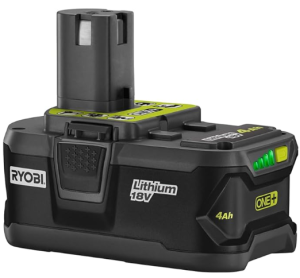
The Ryobi P197 is a newer addition to the lineup, introduced in 2017. It offers the same 18V and 4.0Ah capacity as the P108 but comes with design updates. The most noticeable difference is the 4-stage charge indicator, which gives a clearer view of battery life than the simple gauge on the P108.
This battery is often sold as part of a two-pack, making it attractive for professionals or DIYers who want backup power without waiting for charging. It is built for both standard and heavy-duty tools, and Ryobi highlights its strength in powering saws, impact wrenches, and yard equipment.
Features
-
Voltage and Capacity: 18V, 4.0Ah lithium-ion battery.
-
Power Output: 72Wh, giving solid performance for high-demand tools.
-
Charge Indicator: 4-stage battery status indicator for precise tracking.
-
Compatibility: Works with more than 100 Ryobi One+ tools.
-
Weight and Size: Lighter at 1.65 pounds, with a compact square-shaped design.
-
Charging: Compatible with Ryobi dual chemistry chargers (P113–P131 series).
What We Like
-
Lighter weight than the P108, making handheld tools easier to manage.
-
4-stage indicator is more accurate and user-friendly.
-
Runs smoothly on heavy-duty tools such as saws and impact wrenches.
-
Often sold in two-packs, giving extra value for long projects.
-
Reliable lithium-ion technology prevents self-drain during storage.
What We Didn’t Like
-
Slightly higher price than the P108.
-
Full charge time can vary and may be slower with some chargers.
-
Charger usually not included in the box.
My Opinion
The P197 feels like an upgrade over the P108. The lighter weight is noticeable, especially when attached to handheld tools like drills or impact drivers. The 4-stage charge meter is a welcome change, offering more confidence during long jobs. If budget allows, the P197 is a smart pick, especially for professionals or users with multiple heavy-duty tools.
Detailed Comparison: Ryobi P108 vs Ryobi P197
Both the P108 and P197 share a lot in common. They are 18V lithium-ion batteries with 4.0Ah capacity, making them suitable for long runtime and steady power. Both work with the full range of Ryobi One+ tools, so compatibility is not an issue.
Charging: The P108 has an edge here. With the right charger, it can fully recharge in about one hour. The P197 may take longer depending on the charger used.
Weight: The P197 is lighter at 1.65 pounds, while the P108 weighs 1.79 pounds. This small difference matters when using handheld tools for long periods.
Fuel Gauge: The P108 has a simple one-button gauge, while the P197 offers a 4-stage meter for more accuracy.
Price: The P108 is often slightly cheaper, while the P197 usually costs more but may come in packs of two.
Performance: Both perform well, but the P197 is often favored for heavy-duty tools because of its weight and updated design. The P108 still stands out for quick charging and proven reliability.
FAQs
Q1. Can both batteries fit all Ryobi One+ tools?
Yes, both are fully compatible with the entire 18V One+ system.
Q2. Which battery charges faster?
The P108 usually charges faster, sometimes in as little as one hour.
Q3. Do both have the same runtime?
Yes, since both are 4.0Ah, they provide similar runtime under the same conditions.
Q4. Is the P197 worth the higher price?
Yes, if you want lighter weight and a better charge indicator. For budget-friendly users, the P108 still works very well.
Q5. Are these batteries good for heavy-duty tools?
Both can power heavy-duty tools. The P197 may feel better because it is lighter and easier to handle.
Conclusion
The Ryobi P108 and P197 are both excellent batteries for Ryobi’s One+ 18V system. The P108 is trusted for its fast charging and strong performance. The P197 adds a more modern design, lighter weight, and a 4-stage fuel gauge that many users appreciate.
If cost and charging speed matter most, go for the P108. If you value comfort, accuracy, and updated features, choose the P197. Both are solid investments for anyone working with Ryobi power tools.


