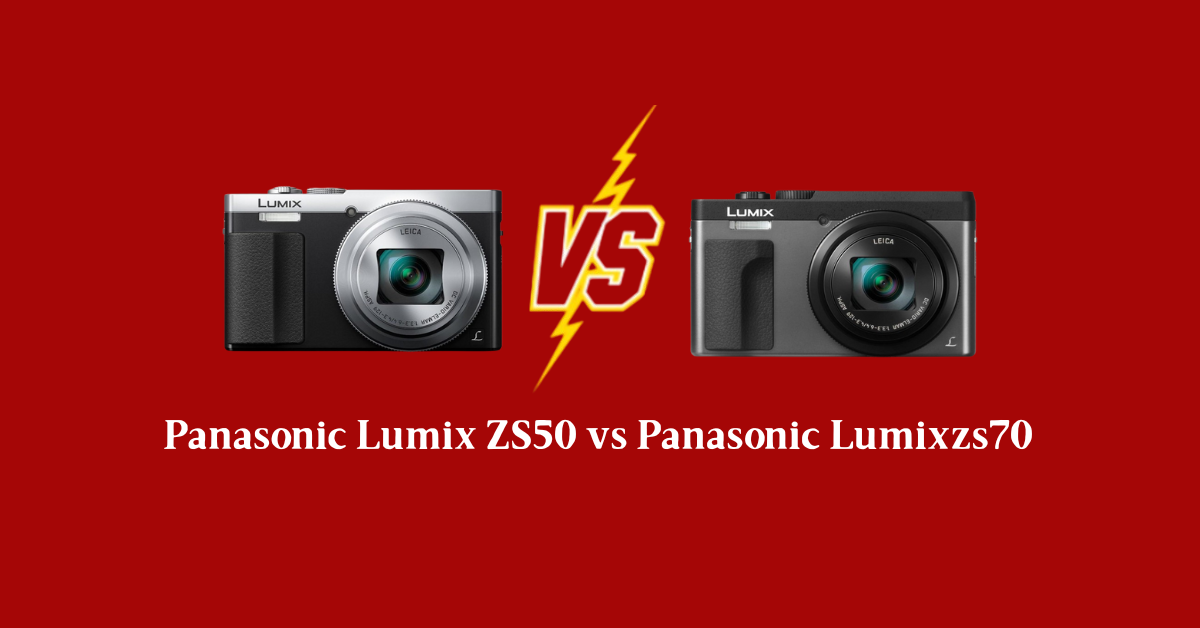
Panasonic Lumix ZS50 vs ZS70: Compact Travel Cameras Comparison
Panasonic’s Lumix ZS series has built a reputation for delivering versatile compact cameras that fit perfectly into a traveler’s lifestyle. The ZS50 attracts enthusiasts with its pocketable design, sharp lens, and strong low-light performance.
The ZS70 steps up with higher resolution, 4K video recording, and a fully articulated screen, appealing to vloggers and photographers who want more creative control. Both models feature powerful zoom ranges, intuitive controls, and reliable image stabilization, making them ideal companions for sightseeing, family trips, or street photography.
Differences in sensor technology, autofocus speed, and video options create distinct experiences that can influence a buyer’s choice. The ZS50 offers simplicity and speed in a lightweight body, while the ZS70 expands creative possibilities for those willing to carry slightly more gear.
Understanding how each camera handles real-world shooting helps photographers select the model that best fits their travel and everyday photography needs.
Panasonic Lumix ZS50 vs ZS70: Travel-Friendly Compact Camera Comparison
Travel photographers often need a compact camera that balances zoom power, image quality, and portability. Panasonic’s Lumix ZS series has long catered to this need. The ZS50 and ZS70 are two popular models in this series. Both cameras feature Leica lenses and high optical zoom, but they differ in sensor size, video resolution, and usability features.
Understanding these differences helps buyers select the camera that best suits their style, whether for travel, daily photography, or social media content. This article compares the two cameras in detail, including technical specifications, features, pros and cons, and hands-on usability insights.
Panasonic Lumix ZS50

About This Tool
The Panasonic Lumix ZS50 is a compact travel camera with a 30x Leica zoom lens. It uses a 12.1-megapixel high-sensitivity CMOS sensor to capture detailed images, even in low-light conditions. A built-in electronic viewfinder reduces glare in bright outdoor conditions. The ZS50 supports Full HD video recording, and its optical image stabilization minimizes blur during handheld shooting. The camera offers manual and automatic modes, making it suitable for both beginners and enthusiasts.
Features
-
Sensor: 12.1 MP High Sensitivity CMOS
-
Lens: 30x Leica DC Vario-Elmar (24–720mm equivalent)
-
Maximum Aperture: f/8
-
Image Stabilization: Optical
-
Viewfinder: Electronic with eye sensor
-
ISO Range: 80–6400
-
Display: 3-inch fixed LCD, 1,040,000 dots
-
Video: Full HD 1080p
-
Connectivity: HDMI, USB, Wi-Fi with NFC
-
Autofocus: 23-point contrast detect, face detection, tracking
-
Shooting Modes: Aperture/Shutter Priority, Manual, Creative Control, Panorama
What We Like
-
Eye-level viewfinder improves outdoor visibility.
-
30x optical zoom covers wide landscapes and distant subjects.
-
Compact and lightweight, ideal for travel.
-
Optical image stabilization reduces handheld blur.
-
Multiple shooting modes allow creative flexibility.
What We Didn’t Like
-
12.1 MP sensor is smaller than newer models.
-
Maximum aperture f/8 limits low-light performance at telephoto.
-
Fixed LCD screen limits shooting angles.
-
No 4K video recording.
My Opinion
The ZS50 is a solid choice for travelers and casual photographers. It balances zoom power, portability, and image quality. Its high-sensitivity sensor performs well in daylight and indoor settings. The eye-level viewfinder and optical stabilization enhance usability outdoors. While not a professional camera, it is reliable for everyday photography and travel adventures.
Panasonic Lumix ZS70

About This Tool
The Panasonic Lumix ZS70 upgrades the ZS50 with a 20.3-megapixel MOS sensor and 4K video capabilities. It retains the 30x Leica zoom lens but adds a 5-axis hybrid optical image stabilizer for smoother handheld shooting. A 180-degree flip-up touchscreen simplifies selfies and creative compositions. The camera supports Wi-Fi connectivity, allowing remote control from a smartphone. Manual controls and a lens-mounted control ring provide hands-on operation for enthusiasts.
Features
-
Sensor: 20.3 MP MOS
-
Lens: 30x Leica DC Vario-Elmar (24–720mm equivalent)
-
Maximum Aperture: f/3.3
-
Image Stabilization: 5-axis hybrid OIS
-
Viewfinder: 0.2-inch 166k-dot electronic, eye sensor
-
ISO Range: Up to 51,200
-
Display: 3-inch touch LCD, 180-degree flip
-
Video: 4K UHD (2160p)
-
Connectivity: Wi-Fi, HDMI, USB
-
Shooting Modes: Intelligent Auto, Manual (P/A/S/M), Creative Video, Panorama, 4K Photo
-
Special Features: 4K Post Focus, Focus Stacking, Lens Control Ring
What We Like
-
4K video and 4K photo features allow detailed capture and post-processing flexibility.
-
Flip-up touchscreen makes selfies and vlogging easy.
-
Higher-resolution sensor captures more detail.
-
5-axis hybrid stabilization improves image sharpness.
-
Wi-Fi connectivity enables remote shooting and easy sharing.
What We Didn’t Like
-
Slightly heavier than ZS50.
-
Electronic viewfinder resolution is lower than the LCD screen.
-
Battery life slightly shorter due to higher power consumption.
-
More complex menu system may confuse beginners.
My Opinion
The ZS70 suits enthusiasts and vloggers who need higher resolution, 4K video, and flexible shooting angles. Its flip-up touchscreen, Wi-Fi control, and advanced stabilization make it versatile for travel and creative photography. The camera is slightly bulkier than the ZS50 but offers far superior features for modern content creation.
Detailed Comparison Of Lumix ZS50 vs ZS70
Both cameras share a 30x Leica zoom lens, compact form factor, and travel-friendly design. The ZS50 excels in simplicity and portability, with solid Full HD video and optical stabilization. The ZS70 surpasses it with 4K video, higher resolution, and advanced stabilization, making it more future-proof.
Image Quality: ZS70’s 20.3 MP sensor captures more detail and offers better low-light performance with a wider aperture (f/3.3 vs f/8). ZS50 produces acceptable images but may struggle at long telephoto in dim lighting.
Video Capabilities: ZS70 supports 4K UHD, 4K Photo, and Post Focus, while ZS50 is limited to Full HD 1080p. Content creators benefit greatly from ZS70’s 4K features.
Display & Viewfinder: ZS70’s 180-degree flip touchscreen enhances selfies and unusual angles. ZS50 has a fixed LCD and eye-level viewfinder, which is sufficient for traditional shooting.
Connectivity: Both cameras offer Wi-Fi, but ZS70 has more advanced smartphone control and sharing options.
Ease of Use: ZS50 appeals to casual users seeking simple operation. ZS70 appeals to enthusiasts needing more control, post-processing flexibility, and 4K recording.
FAQs
Q1: Which camera is better for travel photography?
ZS50 is lighter and simpler, ideal for casual travel. ZS70 offers higher resolution and 4K for detailed captures.
Q2: Can both cameras record video?
Yes. ZS50 records Full HD 1080p, while ZS70 records 4K UHD.
Q3: Do both cameras have image stabilization?
Yes. ZS50 has optical stabilization, and ZS70 has 5-axis hybrid OIS for smoother handheld shots.
Q4: Which camera is better for selfies and vlogging?
ZS70, thanks to its 180-degree flip touchscreen and Wi-Fi control.
Q5: Are these cameras good for beginners?
Yes, ZS50 is simpler and easier for beginners. ZS70 requires more learning but offers more creative features.
Conclusion
The Panasonic Lumix ZS50 suits travelers and casual photographers seeking a lightweight, easy-to-use camera with strong zoom and reliable Full HD video. The ZS70 is ideal for enthusiasts and content creators who need 4K video, higher resolution, advanced stabilization, and flip-up touchscreen for flexible shooting. Both cameras deliver excellent image quality for a compact form factor, but ZS70 provides more advanced tools for creative photography and modern content creation.