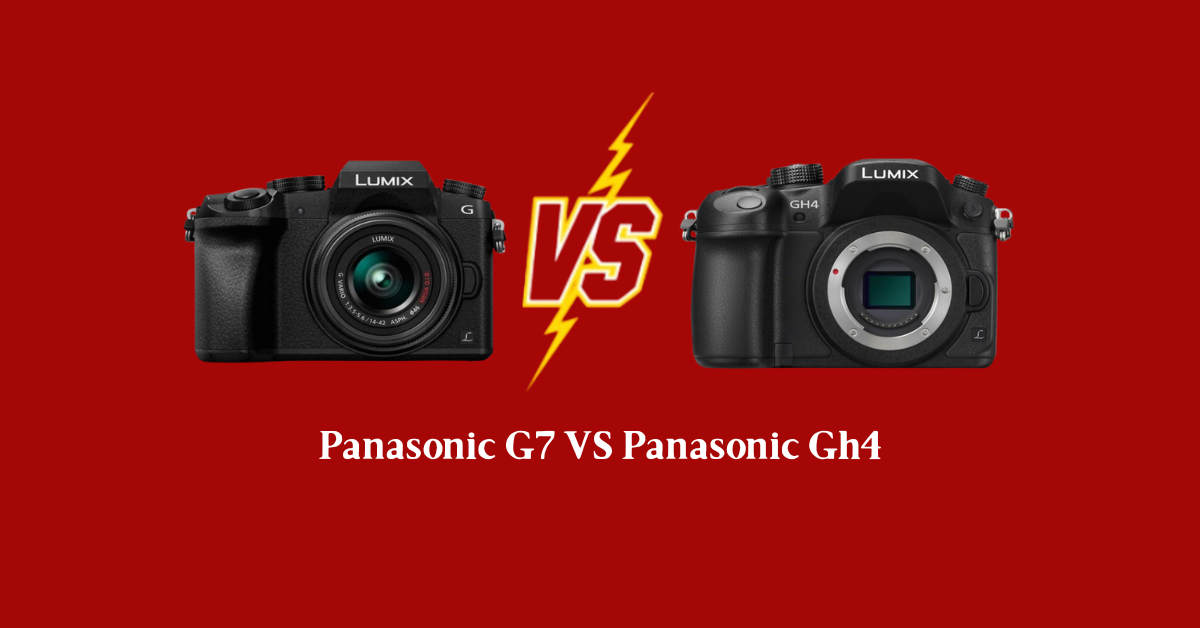
Panasonic G7 vs GH4: Budget Power or Pro Precision?
Panasonic’s mirrorless range offers two standout options for hybrid creators—the G7 and the GH4. Both cameras deliver impressive 4K video performance and reliable still image quality, but they target different audiences.
The G7 appeals to beginners and enthusiasts who want strong performance in a compact and affordable body. Panasonic GH4 takes a step toward professional territory with its tougher build, more advanced controls, and better video recording options.
Each model carries the Micro Four Thirds sensor system, giving access to a wide selection of lenses and excellent portability. The G7 shines in everyday use with faster handling and lighter weight, while the GH4 offers deeper customization and superior durability for demanding shoots.
Understanding the real-world differences between these two cameras helps photographers and filmmakers decide which one fits their creative style and long-term goals. Both remain capable tools that stand strong in Panasonic’s legacy of innovation.
Panasonic G7 vs GH4: Which 4K Mirrorless Camera Fits You Best?
Photographers and video creators often look for a compact camera that balances power, quality, and value. The Panasonic G7 and GH4 are two popular mirrorless models from Panasonic’s LUMIX line. Both shoot in 4K, both are lightweight, and both deliver impressive detail. But each targets a slightly different audience.
The G7 is built for enthusiasts who want professional-looking results without a heavy setup. The GH4, on the other hand, is aimed at advanced users who shoot both photos and videos in demanding conditions. Each camera has its own strengths — from usability and design to image quality and performance.
This comparison breaks down every key feature so you can easily see which one matches your needs better.
Panasonic LUMIX G7
About This Tool
The Panasonic LUMIX G7 is a compact mirrorless camera that brings 4K performance to an affordable level. It features a 16-megapixel Micro Four Thirds sensor with no low-pass filter, delivering sharp and clear photos. Its lightweight body and interchangeable lens system make it perfect for travel, portraits, or casual video shoots.
This model is also known for its strong video features. It records 4K Ultra HD video at 30 frames per second and allows users to extract 8MP still images from video footage. The G7 includes built-in Wi-Fi for quick sharing and offers multiple function buttons for personalized control.
With a solid grip, a tilting LCD screen, and an electronic viewfinder, the G7 feels easy to handle in any lighting condition. It’s designed for photographers who want DSLR performance without the bulk.
Features
The LUMIX G7 carries a 16MP CMOS sensor that captures bright and detailed photos with accurate colors. It supports multiple shooting formats such as RAW, JPEG, and 4K Photo mode. The 14–42mm kit lens gives a wide-to-standard focal length range suitable for landscapes and portraits.
4K QFHD video recording (3840×2160) offers cinematic clarity. The 3-inch touch LCD tilts and swivels, making it easier to shoot from different angles. The OLED viewfinder displays high-contrast visuals with 2.36 million dots.
The G7 also features advanced controls with dual dials for aperture and shutter speed, six customizable function buttons, and Wi-Fi connectivity. Its fast autofocus system uses 49 points for precise subject tracking.
What We Like
The Panasonic G7 delivers sharp and colorful 4K video, which is impressive for its price. The touch LCD is bright and easy to use, and the rotating design helps with vlogging or low-angle photography. The controls are simple yet powerful, making the camera ideal for beginners and intermediate users.
The ability to pause 4K video and extract still photos is a useful feature for capturing perfect moments. Its lightweight build makes it easy to carry anywhere.
What We Didn’t Like
The G7 lacks built-in image stabilization, which makes handheld video slightly shaky without a tripod or stabilized lens. The body is made of plastic, so it doesn’t feel as rugged as higher-end models. Battery life could be better, especially during long video shoots. Low-light performance is decent but not exceptional.
My Opinion
The Panasonic G7 is an excellent camera for users stepping into 4K video and mirrorless photography. It offers good value, intuitive controls, and great color output. It’s best for travel, casual filmmaking, and everyday photography. With its strong video tools and flexibility, the G7 gives a lot of performance in a lightweight package.
Panasonic LUMIX GH4

Product Details
The Panasonic LUMIX GH4 is built for professionals who need high-quality photos and 4K video in one body. It uses a 16.05MP Digital Live MOS sensor paired with a Venus Engine processor, producing clear, detailed images with excellent color accuracy.
This camera supports both UHD 4K (3840×2160) and cinematic DCI 4K (4096×2160) recording. Its magnesium alloy body is weather-sealed and durable, perfect for outdoor or studio use. The GH4 also includes a 3-inch OLED touchscreen and a high-resolution electronic viewfinder.
It features advanced autofocus with 49 focus points, fast 12 frames-per-second continuous shooting, and a long battery life that can last up to 500 shots.
Features
The GH4 offers full manual control, multiple exposure modes, and deep customization. Its 4K video capabilities make it ideal for professional videographers. It includes ports for HDMI, microphones, and headphones, allowing external audio and video monitoring.
The OLED touchscreen provides accurate color reproduction and a smooth user experience. Wi-Fi and NFC connectivity allow quick transfer of photos and videos. Its fast Venus Engine IX processor reduces lag and improves focus speed.
It supports ISO from 100 to 25600, giving flexibility for both bright and low-light situations. The camera’s mechanical shutter can reach up to 1/8000 second, useful for capturing fast action.
What We Like
The Panasonic GH4 stands out for its solid build and professional performance. The weather-sealed magnesium alloy body feels strong and reliable. The 4K recording options and audio ports make it a great choice for filmmakers.
Its autofocus is fast and accurate, and continuous shooting at 12 fps captures fast movement easily. The battery lasts longer than most mirrorless cameras, and the detailed image output makes it ideal for both photography and video production.
What We Didn’t Like
The GH4 body alone is heavier than the G7, and it lacks built-in image stabilization. Some users may find the menu system a bit complex at first. While low-light performance is good, newer models perform slightly better in noise reduction.
My Opinion
The Panasonic GH4 is a reliable camera for professionals who work with both photos and videos. It’s strong, fast, and full of manual controls. It handles 4K video recording with ease and delivers clear, sharp images. While it’s more expensive than the G7, its durability and flexibility justify the price for serious users.
Details Comparison of Panasonic G7 vs Panasonic GH4
Both the Panasonic G7 and GH4 share the same 16MP Micro Four Thirds sensor and deliver excellent 4K performance. The G7 focuses on simplicity, while the GH4 is designed for demanding users.
The G7 has a plastic body, which makes it light and easy to carry. The GH4’s metal body feels more professional and can handle tough environments. The GH4 also supports both UHD and DCI 4K video formats, while the G7 records UHD 4K only.
In terms of handling, the G7 offers intuitive dials and an easier menu for beginners. The GH4 has more control options for professionals. The GH4 also provides more connectivity ports for microphones and monitors, giving better flexibility in video setups.
Battery life is another key difference — the GH4 lasts longer. The G7 is smaller and cheaper but offers fewer pro-level features. If portability and budget matter most, the G7 is a strong choice. For advanced work and durability, the GH4 wins.
FAQs
Which camera is better for beginners?
The Panasonic G7 is easier to use and lighter, making it better for beginners and hobbyists.
Which one has better build quality?
The Panasonic GH4 has a magnesium alloy body, making it stronger and more durable.
Do both shoot in 4K?
Yes, both shoot 4K video, but the GH4 supports both UHD and DCI 4K formats.
Which camera is better for video production?
The GH4 is more suitable for professional video work because it includes more ports and advanced settings.
Do these cameras have image stabilization?
Neither has in-body stabilization, but both support stabilized lenses.
Which camera has better battery life?
The GH4 has a longer battery life, lasting up to 500 shots per charge.
Is the G7 compatible with Micro Four Thirds lenses?
Yes, both cameras use the same Micro Four Thirds mount, so lenses are interchangeable.
Conclusion
The Panasonic G7 and GH4 are strong mirrorless cameras that deliver high-quality 4K video and sharp images. The G7 offers a great balance between performance and simplicity, perfect for travel and everyday shooting. The GH4 is built tougher, shoots longer, and gives professionals more control over video and audio.
For beginners and enthusiasts, the Panasonic G7 offers better value and lighter handling. For advanced creators who demand more features and reliability, the GH4 remains the stronger choice. Both cameras prove Panasonic’s dedication to performance and creativity in the mirrorless world.