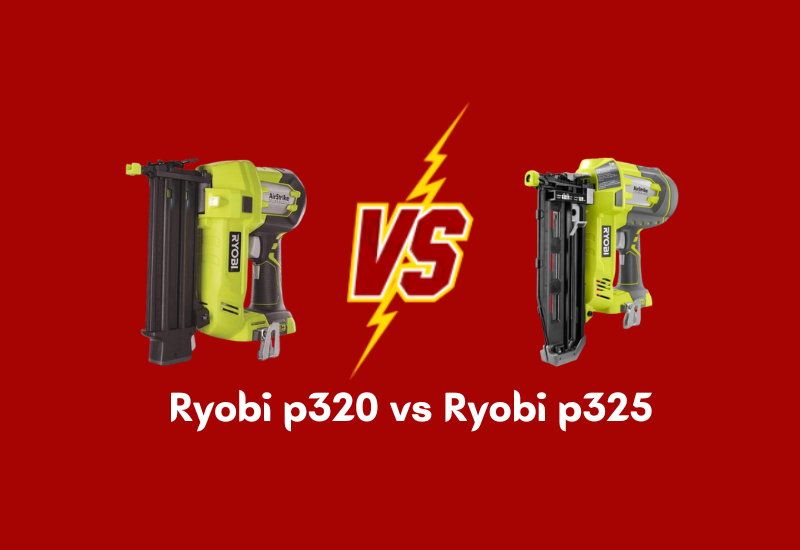
Ryobi P320 vs P325: Nail Gun Showdown for Power and Precision
Ryobi’s cordless nailers continue to attract attention from professionals and DIY enthusiasts who value reliable performance without the hassle of hoses or compressors. Among the lineup, the P320 and P325 models have become top contenders for finish work, trim installation, and general woodworking projects.
The P320 emphasizes portability with its compact design, making it a practical choice for lighter tasks and quick fixes. The P325, on the other hand, is built for demanding applications, offering enhanced driving power and the ability to handle longer nails with ease.
Both tools operate on Ryobi’s widely compatible 18V ONE+ battery system, which adds convenience for anyone already invested in the platform. Examining their differences in power, design, and intended use provides clear insight into which model aligns with specific project requirements. Selecting the right nailer ensures efficiency, precision, and long-term value in any workshop or job site.
Ryobi P320 vs P325: Which Cordless Nailer is Best for You?
Cordless nailers are becoming a must-have in workshops and job sites. They save time, reduce setup hassle, and let you move freely without air hoses or gas cartridges. Ryobi, with its popular One+ 18V system, has some of the most reliable cordless nailers on the market. Two standout tools are the Ryobi P320 Airstrike Brad Nailer and the Ryobi P325 Finish Nailer.
At first glance, both look similar. Both run on the same 18V lithium-ion batteries. Both come with convenient features like LED lighting and tool-free adjustments. Still, these two nailers are not the same. They are built for different tasks and materials.
This article gives you a full breakdown of the P320 vs P325. We’ll cover details, features, pros, cons, and real opinions. By the end, you’ll know which one fits your projects best.
Ryobi P320 Brad Nailer
About This Tool
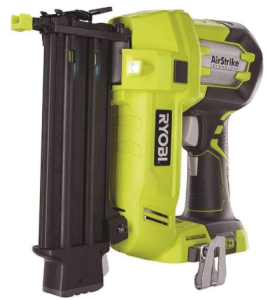
The Ryobi P320 is part of Ryobi’s Airstrike series, which replaces compressors and hoses with cordless convenience. It uses 18-gauge brad nails, which are thin, light, and perfect for delicate trim work. This tool is compact and easier to handle than bigger nailers, making it a favorite for DIY projects.
The P320 can drive up to 1,700 nails per charge when paired with a 4Ah battery. That’s more than enough for most small-to-medium projects around the house. It also comes with useful touches like an onboard LED light, a belt clip, and a low-nail indicator.
Features
-
Compatible with Ryobi 18V One+ lithium-ion batteries
-
Fires 18-gauge brad nails up to 50 mm (2 inches) long
-
Can shoot as many as 1,700 nails per charge (with a 4Ah battery)
-
Dial for easy air pressure and depth adjustment
-
Built-in LED lighting for dark or tight work areas
-
Low-nail indicator to prevent misfires
-
Weighs about 6 pounds for decent portability
-
Belt clip for easy carrying on the job
What We Like
-
Long battery life allows hundreds of nails per session
-
No air compressor or gas cartridges required
-
Easy to adjust nail depth with a simple dial
-
LED light makes it easier to see fine detail work
-
Compact size suits tight corners and indoor projects
What We Didn’t Like
-
Battery and charger sold separately
-
Less powerful than finish nailers, not great for thick materials
-
Heavier than some compact brad nailers on the market
My Opinion
The P320 is an excellent tool for homeowners and DIY users. It does a clean job on trim, furniture repairs, paneling, and light woodworking. It may not have the raw power for heavy-duty projects, but its convenience and efficiency make it a great everyday tool. If you need a cordless nailer for small-to-medium tasks, the P320 is a solid choice.
Ryobi P325 Finish Nailer
Product Details
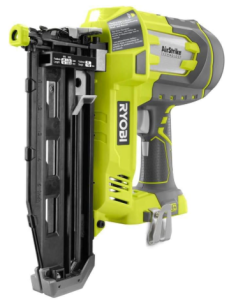
The Ryobi P325 is the bigger brother of the P320. It is built to handle tougher jobs and uses 16-gauge finish nails. These nails are thicker and stronger than brads, which means they hold better in heavy trim, baseboards, or door frames.
The P325 weighs slightly more than the P320 but offers more driving power. It can handle a wider range of wood types and thicker materials. Like the P320, it has user-friendly features, but it also adds tool-free jam release and separate LED light activation for safety.
Features
-
Works with all Ryobi One+ 18V batteries
-
Uses 16-gauge finish nails for stronger holding power
-
Adjustable air pressure with a switch at the back
-
LED lighting activated by a separate trigger for safety
-
Low-nail indicator helps avoid dry firing
-
Tool-free depth adjustment and jam clearing
-
Strong build weighing about 6.6 pounds
-
Designed for heavy trim, crown molding, and carpentry
What We Like
-
Powerful enough for tough woods and larger trim
-
16-gauge nails give better holding strength than brads
-
Tool-free jam release makes it easy to fix nail jams
-
Separate LED light switch avoids accidental firing
-
Reliable for professional carpentry work
What We Didn’t Like
-
Heavier and bulkier compared to the P320
-
More expensive than the brad nailer
-
Does not include battery or charger
My Opinion
The P325 is a strong, dependable nailer. It handles bigger jobs that a brad nailer would struggle with. If you often install baseboards, crown molding, or door casings, this tool is the better option. It costs more and feels heavier, but the extra strength and versatility are worth it for demanding projects.
Detailed Comparison: Ryobi P320 vs Ryobi P325
Both the P320 and P325 are part of the Ryobi One+ 18V family, so they share the same batteries and chargers. Both come with features like LED lights, low-nail indicators, and cordless operation. Still, their differences are important.
The P320 Brad Nailer is designed for lighter work. It uses 18-gauge brads that leave smaller holes, making it ideal for delicate finishes. It is slightly lighter, more compact, and shoots more nails per charge. Perfect for DIY tasks, furniture repair, and light trim.
The P325 Finish Nailer is built for strength. It fires 16-gauge nails that provide a firmer grip. It is heavier and more powerful, which makes it better for heavy trim, crown molding, and structural woodwork. It may not shoot as many nails per charge, but it delivers more power with each shot.
So, the choice depends on your projects:
-
Pick the P320 if you mainly do light woodworking, trim, or furniture repair.
-
Pick the P325 if you need a tool for tougher jobs like baseboards, molding, or framing.
FAQs
Q1. Can I use the same Ryobi batteries for both P320 and P325?
Yes, both work with all Ryobi One+ 18V lithium-ion batteries.
Q2. Which tool is better for beginners?
The P320 is lighter and easier to handle, so it’s better for beginners.
Q3. Do they come with a battery?
No. Both are sold as bare tools, so the battery and charger must be purchased separately.
Q4. Which one is better for professional carpenters?
The P325 is better because of its power and ability to drive stronger 16-gauge nails.
Q5. Can the P320 handle crown molding?
It can work on thin crown molding, but the P325 is more reliable for thicker or heavier pieces.
Conclusion
The Ryobi P320 and P325 are both excellent cordless nailers, but they serve different roles. The P320 Brad Nailer is lighter, easier to use, and designed for smaller projects like trim, furniture, and craft work. The P325 Finish Nailer is heavier, more powerful, and perfect for large-scale jobs like crown molding, baseboards, and door casings.
Both tools save time and effort compared to compressor-powered nailers. Your choice depends on your projects: the P320 is better for light, delicate jobs, while the P325 shines in heavy-duty carpentry.