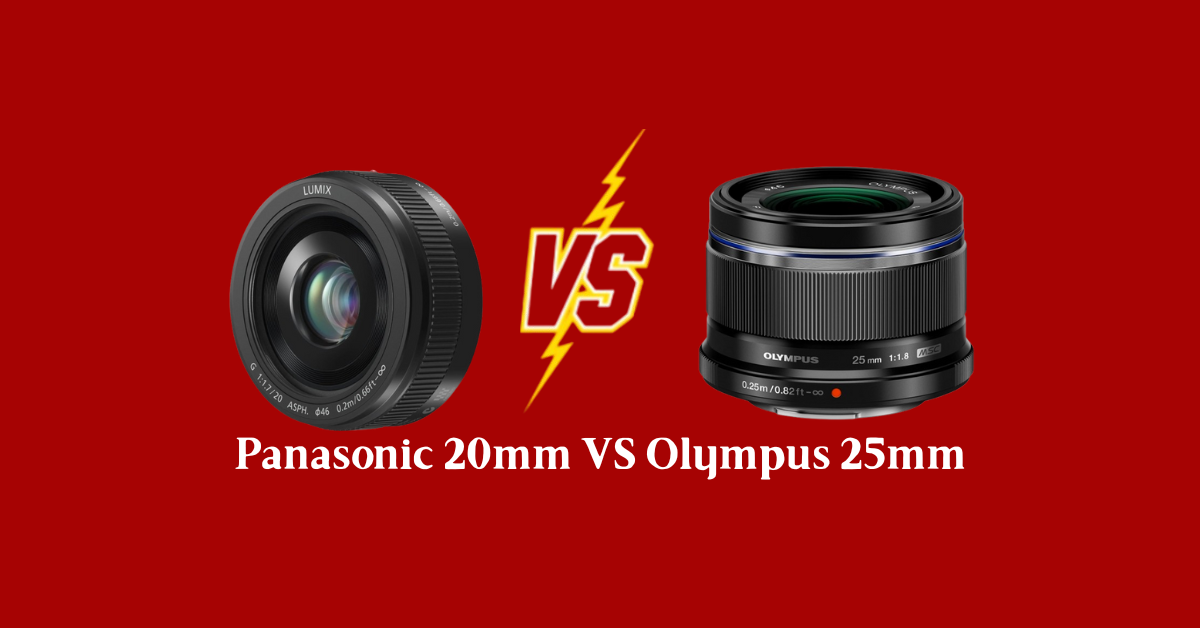
Panasonic 20mm vs Olympus 25mm: Prime Lens Showdown
Prime lenses bring photographers closer to pure image quality, and two standout options in the Micro Four Thirds system are the Panasonic Lumix 20mm f/1.7 and the Olympus M.Zuiko 25mm f/1.8. Both lenses deliver sharp optics, fast apertures, and compact builds, making them favorites for everyday shooting.
The Panasonic 20mm offers a slightly wider perspective, perfect for street, documentary, and travel photography. The Olympus 25mm gives a more natural field of view, which many shooters consider closest to the classic “nifty fifty” experience on full-frame systems.
Each lens excels in low light, produces beautiful background blur, and fits seamlessly on lightweight mirrorless bodies. Differences in autofocus speed, handling, and rendering style separate their appeal, leading to distinct creative advantages.
Deciding between them comes down to personal preference and shooting style. This comparison explores their strengths to help you find the prime lens that complements your vision best.
Panasonic 20mm vs Olympus 25mm: A Complete Lens Comparison
The Panasonic 20mm F1.7 II and the Olympus 25mm F1.8 are two of the most popular Micro Four Thirds prime lenses. Both are compact, sharp, and fast, making them excellent options for everyday photography. Still, they are quite different in terms of focal length, handling, and performance. This comparison explores both lenses in detail, their strengths, and where each one fits best for photographers.
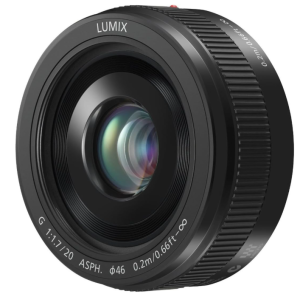
Panasonic LUMIX G II 20mm F1.7 ASPH Lens
About This Tool
The Panasonic 20mm F1.7 II is one of the most popular Micro Four Thirds lenses for photographers who prefer small size with strong performance. It offers a focal length equal to 40mm on a full-frame camera, which is close to the natural field of view. This makes it an excellent option for street photography, travel, and daily shooting.
The lens body is slim and lightweight, so carrying it all day is never a problem. Despite its small size, it still produces images with sharp details and smooth colors. The bright F1.7 aperture allows you to capture images in dimly lit spaces without raising ISO too high. This is why many users consider it a reliable all-rounder.
Features
-
20mm focal length (40mm equivalent on full-frame)
-
Bright F1.7 aperture for natural background blur
-
Closest focusing distance: 0.2m for near-subject shooting
-
Compact pancake body with durable metal mount
-
Two aspherical lenses to reduce distortion and chromatic errors
-
Multi-coated glass for reduced flare and ghosting in bright light
-
Works with contrast-detect AF for precise focusing
What We Like
The sharpness of the Panasonic 20mm is excellent across the frame, even when shooting wide open. Colors appear natural and balanced, giving photos a very clean look. Its F1.7 aperture is also great for subject isolation, producing soft bokeh while keeping the subject sharp. The lens is small enough to fit in a pocket, so it never feels heavy or bulky. For many photographers, this combination of compact size and image quality makes it a go-to everyday lens.
What We Didn’t Like
Autofocus is not as fast as newer Micro Four Thirds lenses. It can hesitate in darker environments or while tracking moving subjects. Focus noise is also noticeable in quiet video recording. Another limitation is the fixed focal length. While this is normal for a prime lens, it does mean you must rely on moving closer or farther from the subject instead of zooming.
My Opinion
The Panasonic 20mm F1.7 II is an excellent lens for users who want strong image quality in a very portable package. It balances sharpness, brightness, and compact design in a way that very few lenses do. While the autofocus could be faster, the lens still delivers reliable results in most shooting situations. For those who value sharp detail and natural rendering, it remains one of the best small primes for the Micro Four Thirds system.
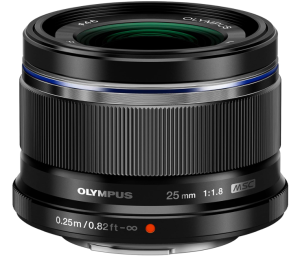
Olympus M.Zuiko Digital 25mm F1.8 Lens
Product Details
The Olympus 25mm F1.8 is designed as a standard lens for Micro Four Thirds cameras. Its field of view is equal to a 50mm lens on a full-frame camera, which makes it one of the most natural perspectives for photography. Many call this focal length “the normal lens” because it closely matches how the human eye sees.
This makes it suitable for portraits, lifestyle photography, and everyday shooting. The design is lightweight but slightly larger than the Panasonic 20mm. The bright F1.8 aperture allows it to perform well in a variety of lighting situations, while still keeping the body compact enough for daily use.
Features
-
25mm focal length (50mm full-frame equivalent)
-
Bright F1.8 aperture with smooth background blur
-
Seven-blade circular diaphragm for pleasing bokeh
-
Closest focusing distance: 0.24m
-
Lightweight body available in black or silver finish
-
Fast and silent autofocus performance
What We Like
The Olympus 25mm delivers a very natural look, making it comfortable to use for portraits and lifestyle shots. The lens handles colors very well, giving images a pleasing and realistic tone. Autofocus performance is quick and silent, which helps both still photographers and video shooters. The build quality feels solid while still keeping the lens lightweight. It also has a slightly longer focal length than the Panasonic, which creates a more flattering look for portraits and subject-focused images.
What We Didn’t Like
While the F1.8 aperture is bright, it does not let in quite as much light as the Panasonic 20mm’s F1.7. This makes a small difference in very dim conditions. The lens is also not as compact, so it does not slide as easily into a pocket or very small bag. Some photographers may notice that sharpness, while good, is not as crisp across the frame as the Panasonic 20mm.
My Opinion
The Olympus 25mm F1.8 is a practical and reliable lens for anyone who prefers a standard perspective. Its 50mm equivalent view is versatile, natural, and works for almost every subject. While it is not as pocketable as the Panasonic 20mm, it balances faster autofocus and a perspective that is often easier to use for portraits. For many users, this makes it a dependable everyday lens choice.
Detailed Comparison: Panasonic 20mm vs Olympus 25mm
Both lenses are high-quality primes, but they are aimed at slightly different needs. The Panasonic 20mm is the more compact option, with a pancake design that makes it perfect for travel and casual shooting. It offers excellent sharpness and a brighter F1.7 aperture, which gives it a small edge in low light. The Olympus 25mm, on the other hand, is slightly larger but provides a classic 50mm equivalent perspective that many photographers love for portraits and everyday scenes.
Autofocus is the key difference between them. The Olympus 25mm has faster and quieter AF, making it more suitable for fast action and video work. The Panasonic 20mm’s autofocus is slower and can make noise, which may be distracting in silent environments. Both lenses are lightweight and portable, but the Panasonic is clearly the more compact of the two.
For those who want the sharpest, most compact lens with excellent low-light performance, the Panasonic 20mm is the better option. For those who value natural perspective, faster autofocus, and a lens that works well for portraits, the Olympus 25mm is the better fit.
FAQs
1. Which lens works better in low light?
The Panasonic 20mm F1.7 handles low light slightly better thanks to its wider aperture.
2. Which lens focuses faster?
The Olympus 25mm F1.8 has quicker and quieter autofocus, making it more reliable for moving subjects and video.
3. Which is more compact?
The Panasonic 20mm is much smaller, with a true pancake design that makes it the most portable option.
4. Which lens is sharper?
Both are sharp, but the Panasonic 20mm often shows slightly more detail, especially in the center of the frame.
5. Which is better for portraits?
The Olympus 25mm produces a classic 50mm equivalent view, which is more flattering for portraits.
Conclusion
The Panasonic 20mm F1.7 and Olympus 25mm F1.8 are both excellent prime lenses for Micro Four Thirds users. Panasonic excels in compactness, sharpness, and low-light ability. Olympus shines in natural perspective, faster autofocus, and portrait photography. The better choice depends on what matters most: a small, sharp lens you can carry anywhere, or a versatile standard lens with faster performance.