Makita Track Saw vs Festool Track Saw – Which One Deserves Your Workbench?
Woodworkers often debate over the best track saw for precision cuts and reliable performance. Two names dominate this conversation Makita and Festool. Both brands have built strong reputations for delivering high-quality tools that meet the demands of professionals and serious DIYers.
Makita impresses with its solid build, smooth operation, and competitive pricing. Festool earns praise for its unmatched accuracy, premium features, and exceptional dust collection system.
Each saw brings unique strengths to the table, making the choice less about brand loyalty and more about matching the right tool to your needs. This comparison highlights design, cutting power, features, and value for money, so you can confidently select the track saw that fits your workflow.
Whether you focus on speed, accuracy, or versatility, the right decision will make a noticeable difference in your projects. Let’s break down the differences to see which model edges ahead.
Makita Track Saw vs Festool Track Saw
Choosing a track saw can be tricky. Both Makita and Festool offer strong, precise, and well-built tools.
Yet, they are different in performance, features, and feel. This guide explains those differences in detail so you can decide with confidence.
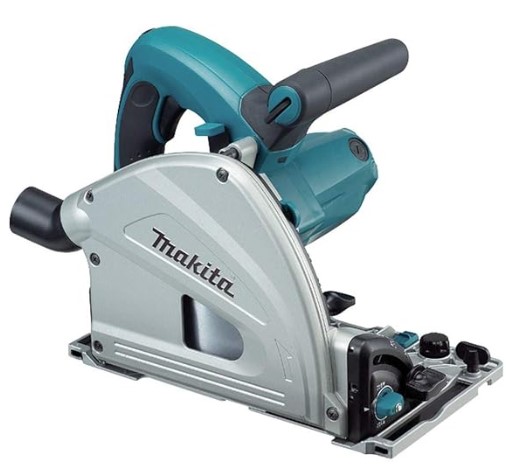
Makita SP6000J 6-1/2-Inch Plunge Track Saw
About This Tool
The Makita Track Saw has a 12.0 AMP motor. It is made to handle many materials with ease. It delivers precise, smooth cuts without splinters. You can control the speed for different tasks, making it suitable for both fine and heavy work.
Features
-
Motor: 12.0 AMP for high performance.
-
Cutting Quality: Splinter-free, mirror-like finish.
-
Speed Control: Electronic control for consistent speed under load.
-
Variable Speed Dial: 2,000 to 5,200 RPM for various applications.
-
Cutting Capacity: 2-3/16″ at 90° and 1-9/16″ at 45°.
What We Like
-
Strong motor that cuts tough materials easily.
-
Smooth and clean edges with no tear-out.
-
Speed can be adjusted for different materials.
-
Large cutting capacity.
What We Didn’t Like
-
Corded design limits mobility.
-
Heavier than some track saws.
My Opinion
The Makita Track Saw is a solid choice for heavy-duty work. It is powerful, accurate, and versatile. It feels built for users who need reliability on big projects.
Festool 577014 Plunge-Cut Track Saw
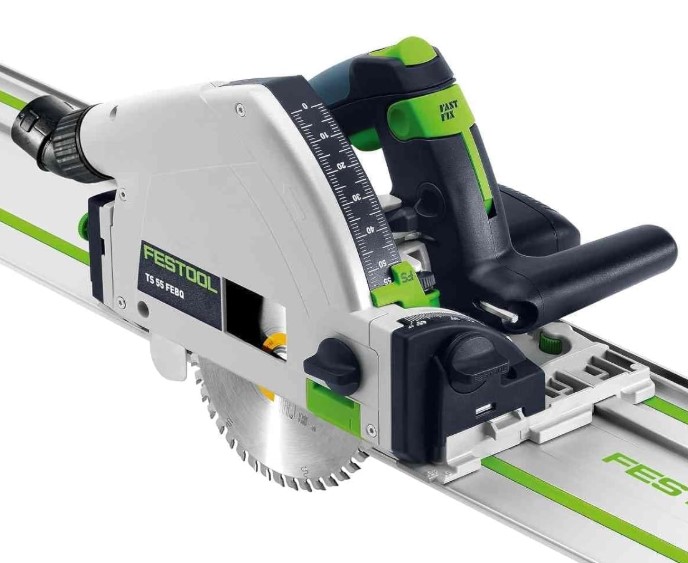
Product Details
The Festool Track Saw offers high torque and fast work speed. It cuts cleanly on both sides with its splinter guard. The cutting edge stays in place even when beveling. It has a riving knife for safety and precise positioning.
Features
-
Work Speed: Up to twice as fast with concentrated torque.
-
Splinter Guard: Splinter-free cuts on both sides.
-
Bevel Stability: Edge remains aligned from 90° to 47°.
-
Accessories: Wide range for more functions.
-
Safety: Riving knife for safer operation.
-
Angle Adjustment: From -1° to 47° with undercut function.
What We Like
-
Fast cutting speed with less wear on the blade.
-
Splinter guard gives perfect edges on both sides.
-
Stable cutting even at angles.
-
Strong safety features.
What We Didn’t Like
-
Higher price compared to others.
-
Accessories add extra cost.
My Opinion
The Festool Track Saw stands out for precision and clean edges. It is ideal for woodworkers who want perfect cuts every time. It offers premium features but comes at a premium price.
Detailed Comparison for Makita Track Saw vs Festool Track Saw
The Makita Track Saw offers strong power, high cutting capacity, and variable speed control, making it great for diverse materials. It works well for both professional and home use.
On the other hand, the Festool Track Saw focuses on precision, speed, and clean cuts on both sides of the material. It also offers advanced angle adjustment and a riving knife for safety.
Makita is more affordable and powerful for general use, while Festool is more refined and better for finish-quality work.
FAQs
Q1: Which track saw is better for beginners?
Makita is easier for beginners due to its simple controls and lower cost.
Q2: Which one gives cleaner edges?
Festool gives cleaner edges, thanks to its double-sided splinter guard.
Q3: Which saw is better for thick materials?
Makita, with its larger cutting capacity, is better for thicker boards.
Q4: Is Festool worth the extra cost?
Yes, if you need perfect finish cuts and advanced features.
Conclusion
Both Makita and Festool track saws are excellent tools. Makita delivers more raw power and cutting capacity for a lower price.
Festool offers unmatched precision, cleaner edges, and better safety features. Your choice depends on whether you value power and budget or precision and premium quality.