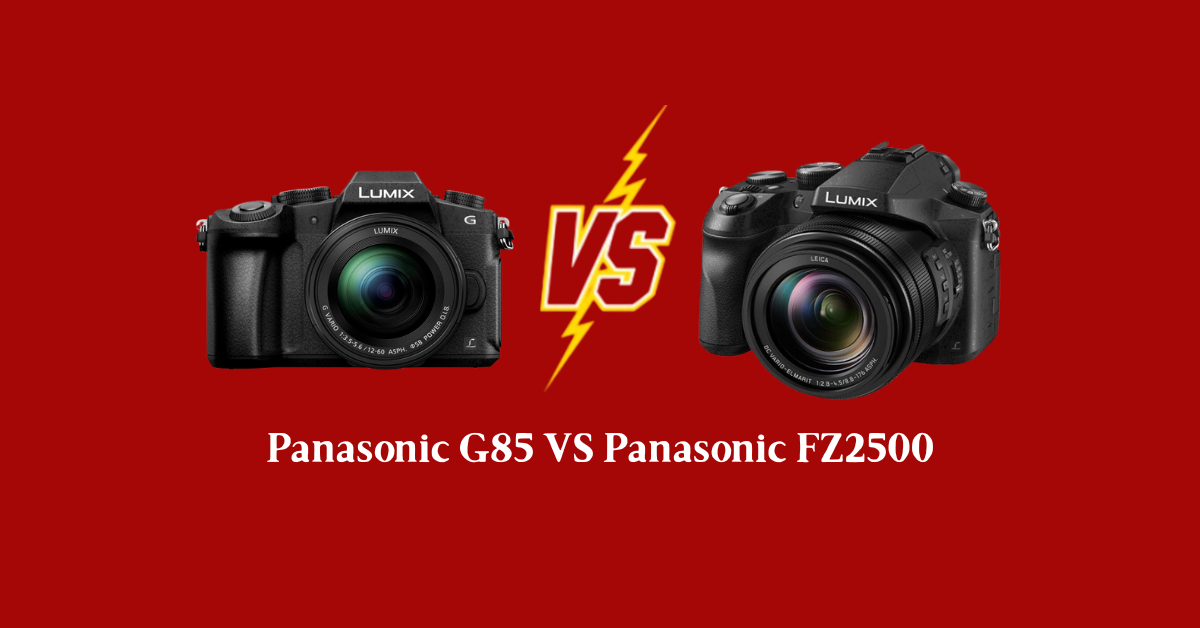
Panasonic G85 vs FZ2500: Compact Zoom or Lens Flexibility?
Panasonic offers two standout options for hybrid creators—the G85 and the FZ2500. Both deliver impressive image quality, 4K video recording, and strong stabilization, yet their designs target different users.
The Panasonic G85 gives photographers the freedom to switch lenses, making it ideal for those who like experimenting with different shooting styles. The FZ2500 takes a different route with an integrated 24-480mm lens, offering wide coverage without changing gear.
The G85’s Micro Four Thirds system adds flexibility and professional control, while the FZ2500 focuses on convenience and extended reach. Each model provides weather sealing, excellent grip, and smooth performance for both photography and video projects.
The choice depends on how you prefer to shoot—either with the creative adaptability of the G85 or the all-in-one practicality of the FZ2500. Both cameras prove that Panasonic knows how to blend innovation with reliability in a portable body.
Panasonic G85 vs FZ2500: A Complete Comparison for Photo and Video Enthusiasts
The digital imaging world is filled with cameras designed to serve both still photography and professional video creation. Among the top contenders in the mid-range segment, the Panasonic Lumix G85 and the Panasonic Lumix FZ2500 stand out for their impressive versatility, advanced optics, and strong video performance.
Both cameras cater to creators who want DSLR-like power without the extra weight. While the G85 uses a mirrorless interchangeable lens system, the FZ2500 is a bridge camera with a fixed Leica lens—each offering distinct strengths.
This detailed comparison explores their design, performance, image quality, and real-world usability. By the end of this guide, you’ll understand which camera suits your workflow—whether you’re a field photographer, content creator, or hybrid video shooter.
Panasonic Lumix G85

About This Tool
The Panasonic Lumix G85 is a mirrorless digital camera built on the Micro Four Thirds system. It delivers exceptional balance between portability and performance. Designed for serious photographers and videographers, it features a 16-megapixel Live MOS sensor without a low-pass filter, boosting fine detail resolution.
The magnesium-alloy body is splash and dust resistant, making it suitable for outdoor and travel use. With dual image stabilization and 4K recording capabilities, the G85 stands as one of Panasonic’s most refined mid-tier models.
Features
High-Resolution Sensor
The G85’s 16MP Micro Four Thirds sensor captures crisp images with rich color depth. By removing the low-pass filter, Panasonic increased detail clarity by nearly 10%, making textures and fine patterns more realistic.
Dual Image Stabilization
One of its major strengths lies in its 5-axis in-body image stabilization combined with 2-axis optical stabilization from compatible Lumix lenses. This Dual I.S. system reduces blur even in handheld shooting or low-light scenes.
4K Photo and Video
The camera records 4K UHD (3840 x 2160) videos at 30 fps and includes 4K Photo and Post Focus features. These functions allow users to select the perfect focus point after capturing an image, offering creative control.
Viewfinder and LCD Display
A 2.36M-dot OLED live viewfinder and 3-inch vari-angle touch LCD screen provide flexible framing options. The EVF delivers high contrast and color accuracy, while the articulating screen is perfect for vlogging or low-angle shots.
Build and Handling
Constructed with a durable yet lightweight body, the G85 offers intuitive controls and tactile dials for quick adjustments. It’s compact enough for travel but solid enough for professional setups.
Connectivity
Built-in Wi-Fi enables remote shooting and quick sharing via the Panasonic Image App. This adds convenience for on-the-go creators.
What We Like
-
Compact and lightweight design
-
Outstanding 5-axis stabilization for both photo and video
-
Sharp, detail-rich images without the low-pass filter
-
Weather-sealed magnesium body
-
Dual control dials for professional handling
-
4K Photo and Post Focus modes for creative flexibility
What We Didn’t Like
-
Limited battery life during 4K video recording
-
Smaller sensor compared to APS-C rivals
-
No headphone jack for audio monitoring
My Opinion
The Panasonic G85 is an excellent hybrid camera for photographers who demand portability and precision. It delivers professional-level image stabilization, impressive 4K output, and reliable ergonomics. While it lacks certain advanced video tools and deeper dynamic range seen in higher-end models, it remains a remarkable value in its class. Its Micro Four Thirds sensor offers enough versatility for both still and motion work, making it a solid choice for enthusiasts and semi-professionals alike.
Panasonic Lumix FZ2500

Product Details
The Panasonic Lumix FZ2500 is a bridge camera engineered for professionals who prefer an all-in-one system. It features a 20.1MP 1-inch MOS sensor paired with a Leica DC Vario-Elmarit lens, providing a focal range equivalent to 24–480mm. This long optical zoom range and constant f/2.8–4.5 aperture make it highly capable across a variety of shooting environments. Designed to mimic DSLR functionality, it includes manual control rings, a large OLED viewfinder, and advanced video specifications that rival entry-level cinema cameras.
Features
Large 1-Inch MOS Sensor
The FZ2500’s 20.1MP sensor captures impressive detail and tonal range. It performs well in both daylight and low-light scenarios, maintaining clarity with controlled noise levels up to mid-ISO ranges.
Leica DC Vario-Elmarit Lens
Its built-in Leica lens is the standout feature. With a versatile 20x optical zoom (24–480mm equivalent), it covers wide landscapes, portraits, and telephoto subjects with consistent image quality. The lens construction minimizes distortion and chromatic aberration.
Professional Video Capabilities
This model records in both UHD and DCI 4K formats at 24p and 30p. It includes advanced video options such as flat picture profiles, unlimited recording duration, and focus transition control—ideal for content creators and cinematographers.
Control and Ergonomics
A DSLR-style body with manual rings provides precise control over zoom, focus, and aperture. The layout supports both handheld and tripod shooting with professional ease.
Display and EVF
Equipped with a 3-inch articulating LCD touchscreen and a 2.36M-dot OLED viewfinder, the camera delivers excellent visibility in all lighting conditions. The screen tilts freely, making it practical for video recording or high-angle shots.
Connectivity and Build
Built-in Wi-Fi and USB connectivity streamline file transfer and remote operation. The FZ2500 also includes multiple customizable buttons, allowing a personalized shooting experience.
What We Like
-
High-quality 20.1MP 1-inch sensor with excellent detail
-
Long 20x Leica optical zoom with smooth operation
-
Strong video features suitable for professional use
-
Ergonomic body with multiple manual controls
-
4K video in both DCI and UHD formats
-
Dual stabilization and clear OLED EVF
What We Didn’t Like
-
Bulky and heavier than most bridge cameras
-
Fixed lens limits upgrade flexibility
-
Slight drop in performance at maximum zoom
-
Not weather-sealed like the G85
My Opinion
The Panasonic FZ2500 is an impressive all-rounder for creators seeking DSLR-level functionality in a fixed-lens system. It excels in video production, offering cinematic options rarely seen in this class. The extended focal range, strong autofocus, and advanced video modes make it suitable for documentary work and travel filmmaking. While it sacrifices portability and lens interchangeability, it remains a powerhouse for users who value convenience and professional video control.
Detailed Comparison Of Panasonic G85 vs Panasonic FZ2500
The Panasonic G85 and FZ2500 cater to different needs within the same creative spectrum. The G85’s Micro Four Thirds system supports interchangeable lenses, giving it more adaptability for various photography styles. The FZ2500, on the other hand, offers a massive built-in zoom range, simplifying operations for users who prefer an all-in-one package.
In terms of image quality, the FZ2500’s larger 1-inch sensor provides slightly better dynamic range and low-light performance. Yet, the G85’s sensor design without a low-pass filter yields sharper fine details, making it ideal for landscape or studio work.
Video performance tilts in favor of the FZ2500, thanks to its unlimited recording time, DCI 4K support, and professional control tools. The G85 still produces excellent 4K footage but leans toward short-form video and hybrid content creation.
Ergonomically, the G85 feels more compact and better suited for travel, while the FZ2500 delivers a full-bodied grip that’s comfortable for extended handheld use. The FZ2500’s fixed lens limits flexibility, but its Leica optics deliver impressive sharpness throughout the zoom range.
For stabilization, both cameras perform exceptionally. The G85’s 5-axis Dual I.S. is slightly more advanced, giving it an edge in handheld shooting. In terms of autofocus, both models deliver consistent accuracy, though the FZ2500 tends to perform better in continuous focus during video.
If adaptability and future lens upgrades matter, the G85 is the superior choice. If simplicity, extended zoom, and advanced video tools are priorities, the FZ2500 stands out.
FAQs
Which camera is better for professional video work?
The FZ2500 provides more advanced video settings, including DCI 4K recording, unlimited recording time, and flat picture profiles, making it ideal for professional videography.
Does the G85 support lens upgrades?
Yes. Being part of the Micro Four Thirds system, the G85 supports a wide variety of Panasonic and Olympus lenses, from wide-angle primes to telephoto zooms.
Which model performs better in low light?
The FZ2500’s larger 1-inch sensor gives it a slight advantage in low-light environments, though the G85’s dual stabilization helps maintain sharpness during handheld shots.
Which is more travel-friendly?
The G85 is lighter and weather-sealed, making it more reliable for outdoor and travel photography.
Can both cameras shoot in RAW format?
Yes, both cameras capture RAW images, providing full post-processing flexibility for professionals.
Are both suitable for beginners?
While both cameras have professional-grade features, the FZ2500’s fixed lens and intuitive layout make it easier for beginners. The G85 requires more understanding of lenses but offers greater long-term flexibility.
Conclusion
Both the Panasonic Lumix G85 and the FZ2500 are powerful imaging tools tailored to serious creators. The G85 excels in flexibility, portability, and stabilized photography, making it an excellent mirrorless option for hybrid shooters. The FZ2500 delivers stronger video capabilities, extended zoom, and an all-in-one professional setup ideal for documentary or event videography.
The final decision depends on your workflow. Choose the G85 for an interchangeable-lens system that evolves with your needs, or go for the FZ2500 for a fixed-lens camera offering cinema-grade control and simplicity. Both models reflect Panasonic’s engineering excellence and continue to serve as trusted tools for creators worldwide.