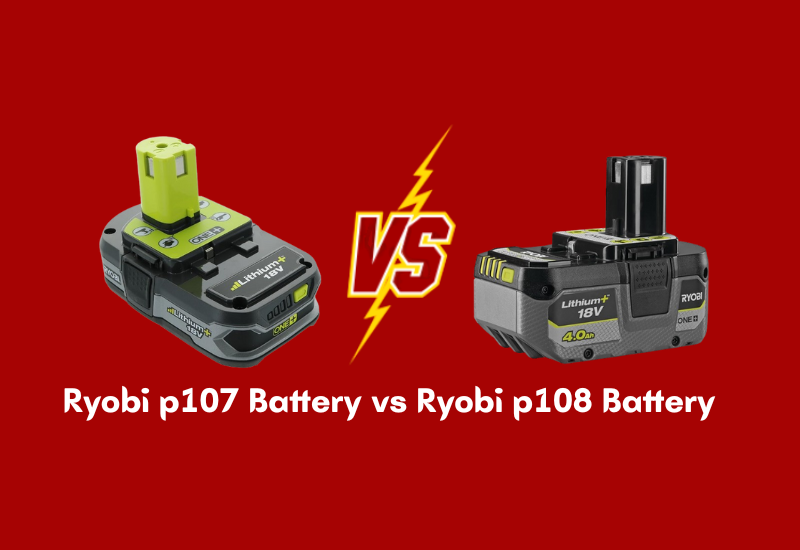
Ryobi P107 vs P108: Picking the Right Battery for Your Tools
A reliable battery can transform the way Ryobi ONE+ tools perform, making the choice between the P107 and P108 an important decision. The P107 stands out as a compact, lightweight option that keeps tools easy to maneuver, perfect for quick jobs or overhead tasks where comfort matters.
The P108 delivers more muscle with a higher capacity and longer runtime, ideal for demanding projects that require extended use without constant recharging. Both batteries share Ryobi’s trusted lithium-ion technology, ensuring consistent power and compatibility across the ONE+ system.
Still, their differences in size, weight, and endurance create distinct advantages for different types of users. Understanding these differences ensures the right balance between convenience and performance. Comparing them side by side highlights which option fits best for everyday DIY work and which one shines in heavy-duty applications, making the choice clearer for anyone investing in Ryobi tools.
Ryobi P107 vs P108: Detailed Comparison
Batteries are the heart of cordless tools. They decide how long you can work, how powerful your tools feel, and how comfortable the job is. Ryobi’s One+ system has a wide range of batteries, but two models often get compared: the Ryobi P107 and the Ryobi P108. Both deliver 18V power and fit the same lineup of tools. Yet, their size, weight, and runtime make them useful for different kinds of work.
The P107 is compact and light, made for quick jobs and tight spaces. The P108 is larger and heavier, built for longer tasks that need more energy. Understanding these differences helps you pick the right battery for your tools and projects. Let’s explore both models in detail.
Ryobi P107 Compact Lithium Ion Battery
About This Tool
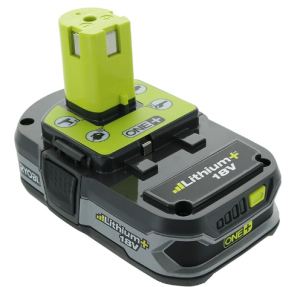
The Ryobi P107 is part of the One+ 18V series. It was designed for portability and comfort. At just under one pound, it feels light in the hand and reduces strain during long hours of drilling or fastening. While smaller in size, it gives consistent fade-free power until the charge runs out. That means your tool won’t weaken as the battery drains.
This battery also includes a built-in fuel gauge, so you can check the charge before starting a task. Its compact design makes it ideal for tight areas, like inside cabinets or overhead work. It also works in colder conditions, down to 14°F (-10°C), which is useful for outdoor or winter projects.
Features
-
18V lithium-ion battery with 2.0Ah capacity
-
Compact and lightweight at 14.1 ounces
-
Fade-free power until empty
-
Built-in LED fuel gauge with button activation
-
Works with 50+ Ryobi One+ tools
-
Operates in harsh cold conditions as low as 14°F
What We Like
-
Light weight reduces fatigue in long projects
-
Compact build fits in tight spaces
-
Fade-free performance gives steady power
-
Fuel gauge helps track battery life easily
-
Affordable price for budget-conscious buyers
What We Didn’t Like
-
Shorter runtime compared to higher-capacity models
-
Not strong enough for power-hungry tools like saws or blowers
-
Sold as a single unit with no charger included
My Opinion
The Ryobi P107 feels like the perfect everyday battery. It works well for drilling holes, driving screws, or using smaller tools that don’t drain a lot of power. The light weight makes it easy to carry and reduces arm fatigue. For people who do short or medium tasks, it’s a reliable choice. As a backup, it also makes sense to keep one in your kit. If your work involves bigger tools, though, the P107 might not last long enough.
Ryobi P108 High Capacity Lithium Ion Battery
Product Details
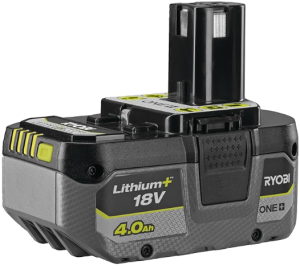
The Ryobi P108 belongs to the same 18V One+ family but is built for endurance. With a 4.0Ah capacity, it holds more than double the energy of the P107. That means longer runtime on each charge and fewer battery swaps during work. It’s especially helpful for demanding tools like circular saws, reciprocating saws, blowers, and sanders.
Despite its larger size, the P108 charges quickly, often in about an hour with the right charger. It also includes a fuel gauge to check remaining power. For anyone working on bigger projects or with multiple tools, this battery offers a balance of strength and efficiency.
Features
-
18V lithium-ion battery with 4.0Ah capacity
-
High-capacity design for extended runtime
-
Quick charging in as little as one hour
-
Fade-free power throughout use
-
Compatible with all Ryobi One+ tools
-
Built-in fuel gauge to monitor charge levels
What We Like
-
Extended runtime for long tasks
-
Quick charging keeps downtime short
-
Works well with heavy-duty tools
-
Reliable fade-free performance
-
Widely compatible across the Ryobi One+ system
What We Didn’t Like
-
Heavier and bulkier than the P107
-
More expensive than compact options
-
Charger not included in most sales
My Opinion
The Ryobi P108 is the go-to battery for heavy users. It keeps saws running longer, blowers working at full power, and lets you complete big projects without constant recharging. While it adds some weight, the runtime makes up for it. For professionals or serious DIYers, this battery offers real value. It may cost more, but it delivers more power per charge.
Detailed Comparison: Ryobi P107 vs P108
Both the P107 and P108 are 18V lithium-ion batteries compatible with the entire Ryobi One+ system. Both include a fuel gauge and provide fade-free power. The main differences lie in weight, size, and capacity.
The P107 weighs just 14.1 ounces, making it very light. It has a 2.0Ah capacity, so it doesn’t last as long but is easy to handle for light tools. It’s best for drills, drivers, and tasks in tight spaces.
The P108 weighs more but offers 4.0Ah capacity. It lasts longer on a single charge and works better for heavy-duty tools like saws and blowers. It also charges quickly, often in about an hour. The tradeoff is added bulk and higher cost.
To put it simply:
-
Pick the P107 for light, everyday tasks and comfort.
-
Pick the P108 for big jobs and tools that drain batteries fast.
FAQs
Q1. Are Ryobi P107 and P108 interchangeable?
Yes. Both work with all Ryobi One+ 18V tools.
Q2. Which battery lasts longer?
The P108 lasts longer with its 4.0Ah capacity, while the P107 offers shorter runtime at 2.0Ah.
Q3. Is the P107 good for heavy-duty tools?
No. It works best with drills, drivers, and smaller tools. Heavy tools need the P108.
Q4. Does the P108 take longer to charge?
Not necessarily. The P108 can charge in about an hour with the right charger, similar to the P107.
Q5. Which one is easier to carry?
The P107 is lighter and easier to handle, especially for overhead work.
Q6. Do both batteries work in cold weather?
Yes. Both can operate in conditions as low as 14°F (-10°C).
Q7. Which battery is better for a beginner?
The P107 is easier for beginners because it’s lighter and cheaper.
Conclusion
The Ryobi P107 and P108 both bring solid performance to the One+ lineup. The P107 is light, compact, and budget-friendly, making it ideal for small projects, short tasks, and backup use. The P108 delivers longer runtime and extra strength, which suits demanding tools and big jobs.
Both share features like fade-free power, a fuel gauge, and full compatibility across the One+ family. The choice depends on your work style. For comfort and portability, the P107 is a smart option.
For endurance and power, the P108 stands out. Many users keep both, using the P107 for light jobs and the P108 for heavy tasks. That way, no matter the project, the right battery is always ready.