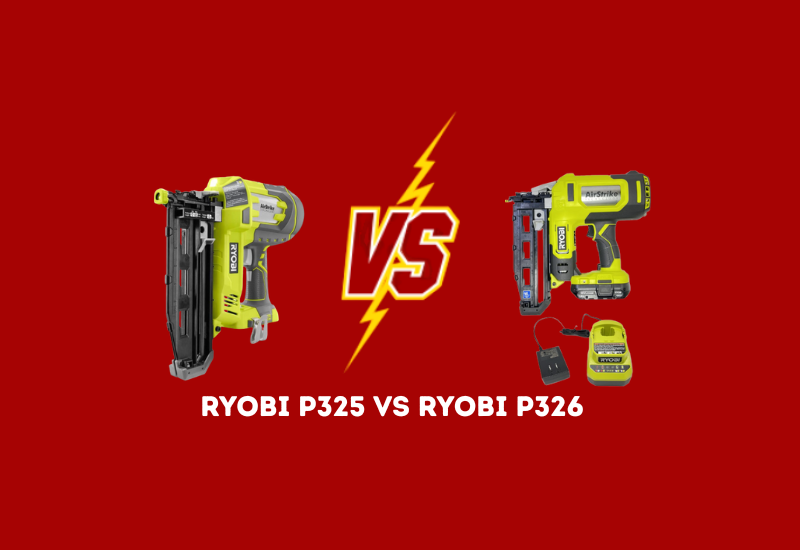
Ryobi P325 vs P326: Which Brad Nailer Drives More Value for Your Projects?
Ryobi’s 18V ONE+ lineup includes some of the most accessible cordless nailers on the market, and the P325 and P326 stand out as popular choices for trim and finish work. The P325 has earned a strong reputation for its driving power, depth adjustment, and compatibility with a wide range of brad nails, making it a versatile tool for both hobbyists and professionals.
The P326 refines the design with an updated look, improved ergonomics, and subtle performance tweaks aimed at enhancing control and comfort during longer projects. Both models share the convenience of cordless operation, eliminating the need for compressors, hoses, or gas cartridges.
While the P325 focuses on proven strength and reliability, the P326 brings added ease of use for those who value smoother handling. This comparison explores design differences, driving power, and usability to help determine which nailer best supports your finishing projects.
Ryobi P325 vs P326: Which Finish Nailer Should You Choose?
Ryobi has built a strong reputation with its AirStrike series of cordless nailers. These tools remove the need for noisy compressors, tangled hoses, and bulky setups. Among the most popular models are the Ryobi P325 and the Ryobi P326.
Both are part of the ONE+ 18V family, which means they run on the same batteries as other Ryobi tools. At first glance, they seem very similar. Both handle 16-gauge nails, both are cordless, and both include features that improve convenience.
But there are some key differences in size, design, features, and overall performance. This guide will give you a complete breakdown of the P325 vs P326, so you can decide which model is better for your projects.
Ryobi P325
About This Tool
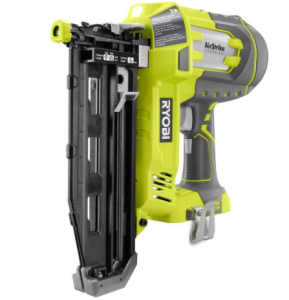
The Ryobi P325 is one of the earlier 16-gauge finish nailers in the ONE+ lineup. It’s designed for trim work, crown molding, baseboards, and other finish carpentry tasks. It uses the AirStrike technology that removes the need for air compressors, making it easy to grab and go for small or large projects.
Features
-
Air Pressure Adjustment Dial: Lets you control how deep the nails drive into the surface.
-
LED Lighting: Built-in light for dark or tight work areas.
-
Low Nail Indicator: Warns you before the tool runs out of nails.
-
Tool-Free Depth Adjustment: Quick changes without extra tools.
-
Jam Release: Easy front-access design to clear misfires.
-
ONE+ Battery Compatibility: Works with all Ryobi 18V batteries, from older models to new high-capacity packs.
What We Like
-
Consistent power for trim and molding work.
-
Strong battery compatibility across the Ryobi ecosystem.
-
Good balance for longer projects.
-
LED light makes work easier in shadows.
-
Clear jam release saves time.
What We Didn’t Like
-
Nose is larger compared to newer models, so it doesn’t fit easily in tight spots.
-
Slightly heavier design at about 6.6 lbs.
-
No included battery or charger (tool-only purchase).
My Opinion
The Ryobi P325 is still a reliable tool. It offers good performance for most finish work, and the compatibility with existing Ryobi batteries makes it a cost-effective choice. For users who don’t need advanced updates or smaller designs, the P325 remains a strong performer.
Ryobi P326
Product Details
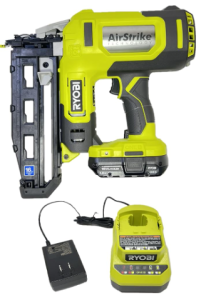
The Ryobi P326 is the updated version of the P325. It’s part of the latest generation of AirStrike tools, with better efficiency, a slimmer nose design, and improved control. Like the P325, it’s cordless and works with the Ryobi ONE+ battery platform.
Features
-
78% Smaller Nose Design: Provides better visibility and allows access to tight spaces.
-
Tool-Free Depth Adjustment: Prevents overdriving and protects delicate surfaces.
-
Air Pressure Dial: Adjusts driving power for different materials.
-
Tool-Free Jam Release: Clears jammed nails quickly.
-
Bulk Kit Option: Includes nailer, battery, and charger in some packages.
-
Cordless and Lightweight Build: Easy to carry from room to room.
What We Like
-
Slimmer nose for more accurate nail placement.
-
Easier access to corners and trim work.
-
Comes with a battery and charger in some kits.
-
Consistent drive quality across different wood types.
-
Slightly lighter design than the P325.
What We Didn’t Like
-
Slightly more expensive than the P325.
-
New design may still feel bulky compared to pro-grade nailers.
-
Limited availability in some regions since it’s a newer release.
My Opinion
The P326 feels like the natural evolution of the P325. The smaller nose and better visibility are major upgrades, especially for precision tasks. If you are starting fresh and don’t already own a Ryobi nailer, the P326 is a smarter choice because it’s designed with modern improvements.
Detailed Comparison Of Ryobi P325 vs Ryobi P326
The Ryobi P325 and P326 share the same foundation. Both run on 18V ONE+ batteries, use AirStrike technology, and drive 16-gauge nails between ¾ inch and 2½ inches. Both feature tool-free adjustments and jam release systems.
The real difference lies in design and ease of use. The P326 has a slimmer nose, giving it a huge advantage for trim work, crown molding, and jobs where precision matters. The P325 is bulkier, making it harder to fit in tight corners, but it still performs well for open, general finish work.
Weight is another factor. The P326 is slightly lighter, making it easier to handle during longer projects. The P325, while heavier, feels sturdy and well-balanced.
Price also plays a role. The P325 is usually cheaper, especially as it has been on the market longer. The P326, being newer, costs more but often comes in bundle kits with batteries and chargers, adding extra value for new buyers.
If you already own a Ryobi ONE+ battery system and want a budget-friendly nailer, the P325 is a solid choice. If you are buying your first Ryobi nailer and want a tool designed for modern precision, the P326 edges out as the winner.
Performance on Different Materials
-
Hardwood: Both nailers can handle hardwood, but the P326 provides more consistent depth thanks to its updated nose design.
-
Softwood: Both work well; the P325 may slightly overdrive without careful adjustment.
-
Trim and Molding: The P326 is better due to its slim profile and clear line of sight.
-
Baseboards: Both perform well, with little difference in outcome.
FAQs
1. Can both the Ryobi P325 and P326 use the same batteries?
Yes, both are compatible with all Ryobi ONE+ 18V batteries.
2. What size nails do they accept?
Both models take 16-gauge nails ranging from ¾ inch to 2½ inches.
3. Does the P326 replace the P325?
Not officially, but the P326 is an updated version with a slimmer nose and better handling.
4. Which model is better for beginners?
The P326, because of its visibility and included kits with battery and charger.
5. Which one is more affordable?
The P325 is usually cheaper, especially as a tool-only option.
Conclusion
The Ryobi P325 and P326 are both solid finish nailers. The P325 is a reliable, budget-friendly choice that still performs well. The P326 is the improved version with a slimmer nose, lighter build, and better precision.
For users who already own Ryobi batteries and want to save money, the P325 is still a great investment. For those starting fresh or looking for the most accurate and updated design, the P326 is the better option.
Both tools continue to show why Ryobi’s AirStrike series is popular: cordless convenience, reliable performance, and compatibility across the ONE+ system.